Black Sea grain trade grinds to a halt, wheat prices rising worldwide
The maritime dimension of the Russia–Ukraine war has effectively paralyzed one of the world's most important grain export routes. In recent months, the Russian army has intensified its attacks on Ukrainian ports, grain terminals and transport hubs, while Ukraine has responded by targeting Russian ports, cargo ships and logistics facilities. The result: more than 97 percent of Russian and Ukrainian maritime grain exports have temporarily ceased, while the world market price of wheat has risen by about 6.5 percent in a single month, and is now roughly 30 percent higher than a year earlier.
Russia and Ukraine together account for roughly 27–31 percent of the world's wheat trade. A significant portion of the two countries' produce traditionally reaches the Middle East, North Africa and Asia via the Black Sea, and if this route remains closed for an extended period, the countries most dependent on imports will have to replace Black Sea shipments with more expensive Australian, American, Argentine or European grain. The primary cause of the collapse of Ukrainian exports is Russia's destruction of ports: Moscow has carried out repeated missile and drone attacks against Odesa, Chornomorsk, Pivdennyi and the Danube ports, while also targeting ships, rail links and warehouses. Due to the growing military risk, some shipping companies are refusing to enter Ukrainian ports, and insurers have significantly raised war-risk premiums, with London's maritime insurers having already declared the entire Black Sea area a high-risk zone.
Ukraine is trying to move its produce by road, rail and via the Danube, but these routes cannot fully replace maritime shipping. The situation is further aggravated by low water levels on the Danube, limited rail capacity, and the fact that Russia is regularly attacking logistics infrastructure near the Ukrainian-Moldovan and Ukrainian-Romanian borders. Kyiv has requested additional freight trains from Romania and Poland, but the volumes available via land routes are still only a fraction of the Black Sea ports' former capacity. Russian grain exports have also fallen sharply due to Ukrainian drone attacks — Moscow previously handled nearly 90 percent of its maritime grain shipments through the Black Sea, but is now hastily converting fertilizer and coal terminals in the Baltic Sea and the Arctic. Russian grain exports fell by 31 percent in July and August compared with the same period a year earlier, and September could see a drop of as much as 50 percent.
The greatest danger threatens the heavily import-dependent states of the Middle East and North Africa. Egypt, Turkey, Lebanon and several African countries rely heavily on cheap Black Sea grain for their food supply. Higher purchase prices could not only drive up the price of bread but also strain state subsidy systems and threaten political stability. The rise in food prices during Russia's 2010 export ban also contributed to the social tensions that preceded the Arab Spring. The current crisis, moreover, is not occurring in isolation. The war situation around the Strait of Hormuz has driven up the price of fuel and fertilizers, and the intensifying El Niño is threatening next season's harvest in several agricultural regions — all of which means the market cannot expect the Black Sea shortfall to be fully offset in the short term by grain produced elsewhere.
The Black Sea blockade is thus no longer merely a Russian tool for economically strangling Ukraine, but also threatens a global food security crisis: the longer the ports remain partially or fully closed, the higher prices could rise, while once again the countries with the least money for more expensive alternative supplies will bear the heaviest consequences.
Ugar
Did you like this article?
Support our work with a small donation
Secure payment via Stripe • Min. 2 EUR
Gesta recommendations:

World first: flying drones deliver Ukrainian combat robots behind Russian lines
Ukraine's Third Army Corps announced that during Operation Vivaldi, 125 square kilometers of territory were brought back under Ukrainian control in the Lyman area, in the northern part of Donetsk region. One of the operation's most important innovations was that large flying drones carried explosive-laden ground combat robots more than ten kilometers behind Russian lines.

Artificial intelligence used to detect underground pipe leaks in Buzău
The regional water utility in Buzău County has reduced network water loss using AI-supported noise sensors. The system monitors the sounds and vibrations produced by water escaping from pressurized pipes, then uses the data to identify areas where a hidden pipe break or leak is likely located.

A Russian test attack on NATO could come within months
More and more European intelligence services and political leaders are warning that Russia could extend its military and sabotage operations beyond Ukraine in the coming months. For now, the most likely scenario is not a full-scale invasion of a NATO member state, but a limited attack designed to test the alliance's unity and whether member states are truly willing to invoke Article 5 on…

No matter what other name we give it, we are, in fact, at war!
Information war, cyberwar, hybrid war, shadow war, sub-threshold operation: Europe is finding ever more linguistic ingenuity to describe what Russia is simply waging against it as war. Sylvie Kauffmann, foreign affairs columnist at Le Monde, argues that this verbal magic must end, because as long as the attacks are called "incidents", "provocations" and "hybrid threats", we never even get to the…
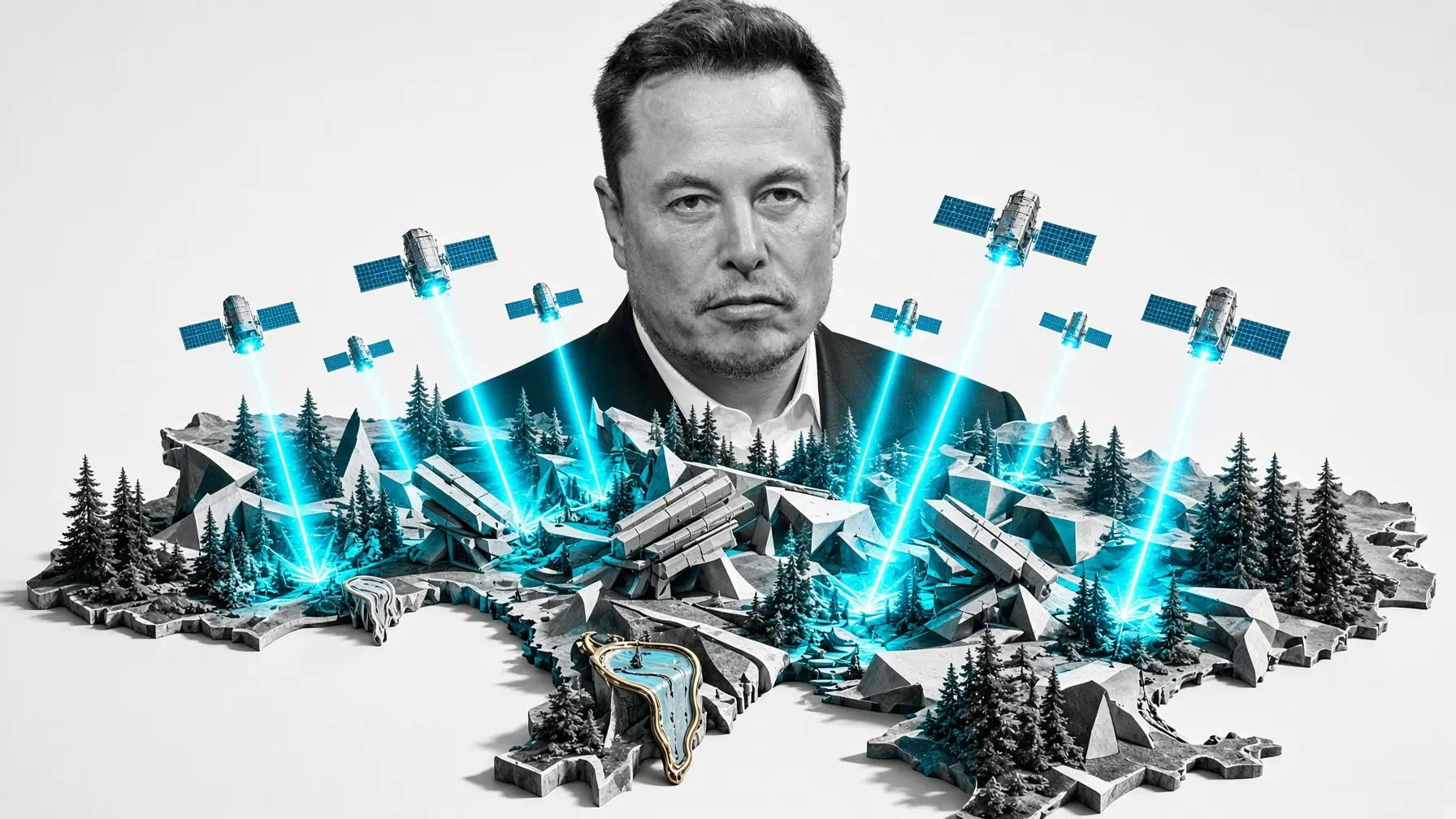
Finland asks Musk for help: Starlink could be used to hunt down Russian missile launchers attacking Ukraine
Finnish President Alexander Stubb has asked Elon Musk to extend Ukraine's use of the Starlink satellite internet service to Russian territory as well. This would allow the Ukrainian army to use drones controlled via satellite link to attack the mobile Russian missile launchers from which ballistic missiles are fired at Ukrainian cities and energy infrastructure.