World first: flying drones deliver Ukrainian combat robots behind Russian lines
Ukraine's Third Army Corps announced that during Operation Vivaldi, 125 square kilometers of territory were brought back under Ukrainian control in the Lyman area, in the northern part of Donetsk region. One of the operation's most important innovations was that large flying drones carried explosive-laden ground combat robots more than ten kilometers behind Russian lines.
According to the corps' data, fifty of the 125 square kilometers had actually been under Russian occupation, while in the remaining area Russian infiltration groups were eliminated and disrupted Ukrainian control was restored. Ukrainian forces liberated the settlements of Shandryholove and Derylove, and gained full control over Drobysheve, while in an earlier phase of the operation they announced the recapture of Serednye and the clearing of additional villages. The data on territorial gains was released by Brigadier General Andriy Biletsky, commander of the Third Army Corps.
According to the corps, during the operation the world's first attack of its kind was carried out, in which heavy flying drones delivered ground combat robots behind enemy lines. The aerial vehicles transported tracked or wheeled robots loaded with explosives into the rear of Russian positions, where they were then guided by remote control to designated targets. The robots carried out reconnaissance, attacked positions and logistics points, and cleared the way for Ukrainian infantry. One of the method's key advantages is that Ukrainian soldiers do not have to personally enter areas monitored by drones and covered by artillery. The ground robots can carry explosives to Russian dugouts, deliver supplies to forward units, evacuate the wounded, and conduct reconnaissance using their cameras and microphones, while their loss represents a much smaller cost than the destruction of a soldier or a conventional armored vehicle. According to Biletsky's plans, over time unmanned systems could take over as much as a third of the tasks currently performed by soldiers serving on the front line.
According to Ukrainian statements, more than 15,700 drone and robot missions were carried out during Operation Vivaldi, and the unmanned vehicles moved around 3,300 tons of equipment and supplies. The corps claims that Russian losses exceeded three thousand men, and that the operation dealt a severe blow to the offensive capabilities of the 20th and 25th Combined Arms Armies as well as the 1st Guards Tank Army.
The operation aimed to eliminate Russia's infiltration tactics
In recent times, the Russian army has frequently sent small infantry groups through gaps in Ukrainian positions, which sometimes hid several kilometers deep before attacking logistics routes and the defenders' rear areas. The Ukrainians used electronic warfare, aerial reconnaissance, strike drones and robots to locate and destroy these groups. The Third Army Corps emphasized that Operation Vivaldi has not yet ended. Referring to the choice of name, Biletsky said that Vivaldi has four seasons, and so far the Ukrainian army has only presented the first.
Source: G4Media
Did you like this article?
Support our work with a small donation
Secure payment via Stripe • Min. 2 EUR
Gesta recommendations:

Artificial intelligence used to detect underground pipe leaks in Buzău
The regional water utility in Buzău County has reduced network water loss using AI-supported noise sensors. The system monitors the sounds and vibrations produced by water escaping from pressurized pipes, then uses the data to identify areas where a hidden pipe break or leak is likely located.

Black Sea grain trade grinds to a halt, wheat prices rising worldwide
The maritime dimension of the Russia–Ukraine war has effectively paralyzed one of the world's most important grain export routes. In recent months, the Russian army has intensified its attacks on Ukrainian ports, grain terminals and transport hubs, while Ukraine has responded by targeting Russian ports, cargo ships and logistics facilities. The result: more than 97 percent of Russian and…

A Russian test attack on NATO could come within months
More and more European intelligence services and political leaders are warning that Russia could extend its military and sabotage operations beyond Ukraine in the coming months. For now, the most likely scenario is not a full-scale invasion of a NATO member state, but a limited attack designed to test the alliance's unity and whether member states are truly willing to invoke Article 5 on…

No matter what other name we give it, we are, in fact, at war!
Information war, cyberwar, hybrid war, shadow war, sub-threshold operation: Europe is finding ever more linguistic ingenuity to describe what Russia is simply waging against it as war. Sylvie Kauffmann, foreign affairs columnist at Le Monde, argues that this verbal magic must end, because as long as the attacks are called "incidents", "provocations" and "hybrid threats", we never even get to the…
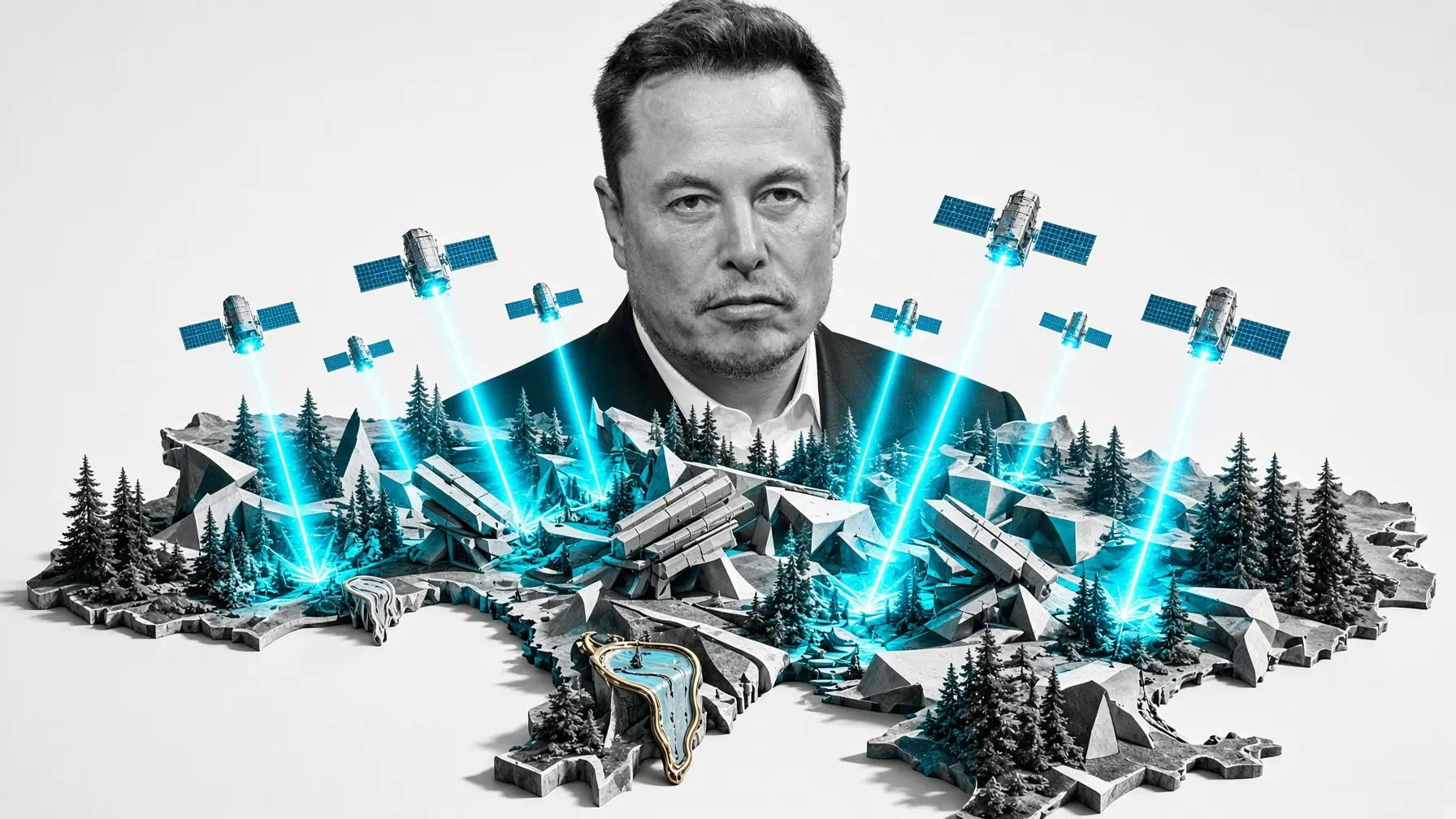
Finland asks Musk for help: Starlink could be used to hunt down Russian missile launchers attacking Ukraine
Finnish President Alexander Stubb has asked Elon Musk to extend Ukraine's use of the Starlink satellite internet service to Russian territory as well. This would allow the Ukrainian army to use drones controlled via satellite link to attack the mobile Russian missile launchers from which ballistic missiles are fired at Ukrainian cities and energy infrastructure.