A Russian test attack on NATO could come within months
More and more European intelligence services and political leaders are warning that Russia could extend its military and sabotage operations beyond Ukraine in the coming months. For now, the most likely scenario is not a full-scale invasion of a NATO member state, but a limited attack designed to test the alliance's unity and whether member states are truly willing to invoke Article 5 on collective defense.
According to an assessment by Danish military intelligence, the risk that Russia could launch a long-range strike on NATO infrastructure supporting Ukraine, or carry out a limited incursion with small, unmarked military units into the territory of a neighboring country, is low but growing. The service says such operations could begin within months. The Danish analysis still considers a full-scale Russian invasion of a NATO country highly unlikely, but no longer categorically rules it out. The danger could grow significantly if Moscow concludes that NATO member states would not respond in a unified way, or that the United States would be unwilling or unable to come to the defense of its European allies. Donald Trump's unpredictable NATO policy, along with Slovak Prime Minister Robert Fico's recent statement that he does not want to drag his country into a war “over some Article 5,” only adds to this uncertainty.
The head of Czech intelligence, Michal Koudelka, also warned that Moscow could try to test NATO through a limited military incursion, a false-flag operation, a drone or missile strike, or a large-scale influence campaign. According to Koudelka, these scenarios could become reality not in years, but in months. The Baltic services are somewhat more cautious, saying they see no evidence yet of preparations for a direct attack, but agree that Russia is preparing more assertive and dangerous operations in Europe. These warnings are not based merely on theoretical scenarios. In Poland, deliberate arson damaged a Starlink station that also served the Ukrainian army's communications. Germany has blamed Russia for a drone operation equipped with explosives near Leipzig Airport, while sabotage attacks have been carried out or prepared in several European countries against weapons factories, railway lines, energy facilities and infrastructure supporting shipments to Ukraine.
According to the Polish leadership, these are no longer mere threats but actual attacks. Foreign Minister Radosław Sikorski cited cases of arson, bombings, drone incursions and Russian military equipment entering Polish airspace. The Polish air force now has to put its F-16 fighters on alert almost every day, since it is impossible to know in advance whether a Russian drone or missile approaching the country's border will actually change course. In Romania, drones or drone debris have entered the country's territory more than a hundred times since the start of the invasion of Ukraine, Foreign Minister Oana Țoiu said. Bucharest has no evidence that Russia is directly targeting Romania, but this does not change the fact that Moscow bears responsibility for the danger threatening the Romanian population and infrastructure. In response, the Romanian government closed the Russian consulate in Constanța and is consulting with its allies on further steps.
According to Kaja Kallas, the European Union's High Representative for Foreign Affairs and Security Policy, sabotage attacks and airspace violations are rapidly increasing across Europe. Moscow's goal is to intimidate European societies, divide NATO, and push states into reducing their support for Ukraine. That is precisely why Russia's strategy relies on actions that can cause serious damage while allowing Moscow to officially deny responsibility, making it harder for the targeted countries to give a common and proportionate response. Some European officials fear that Russia will deliberately try to disguise a drone or missile strike on NATO territory as an “accident.” If the alliance fails to respond in a unified manner, Moscow would prove to itself and to the world that Article 5 is more of a political promise than a functioning military guarantee. That is why the shared conclusion of these warnings is that Europe needs not panic, but clear deterrence, protection of critical infrastructure, and continued support for Ukraine.
Ugar
Did you like this article?
Support our work with a small donation
Secure payment via Stripe • Min. 2 EUR
Gesta recommendations:
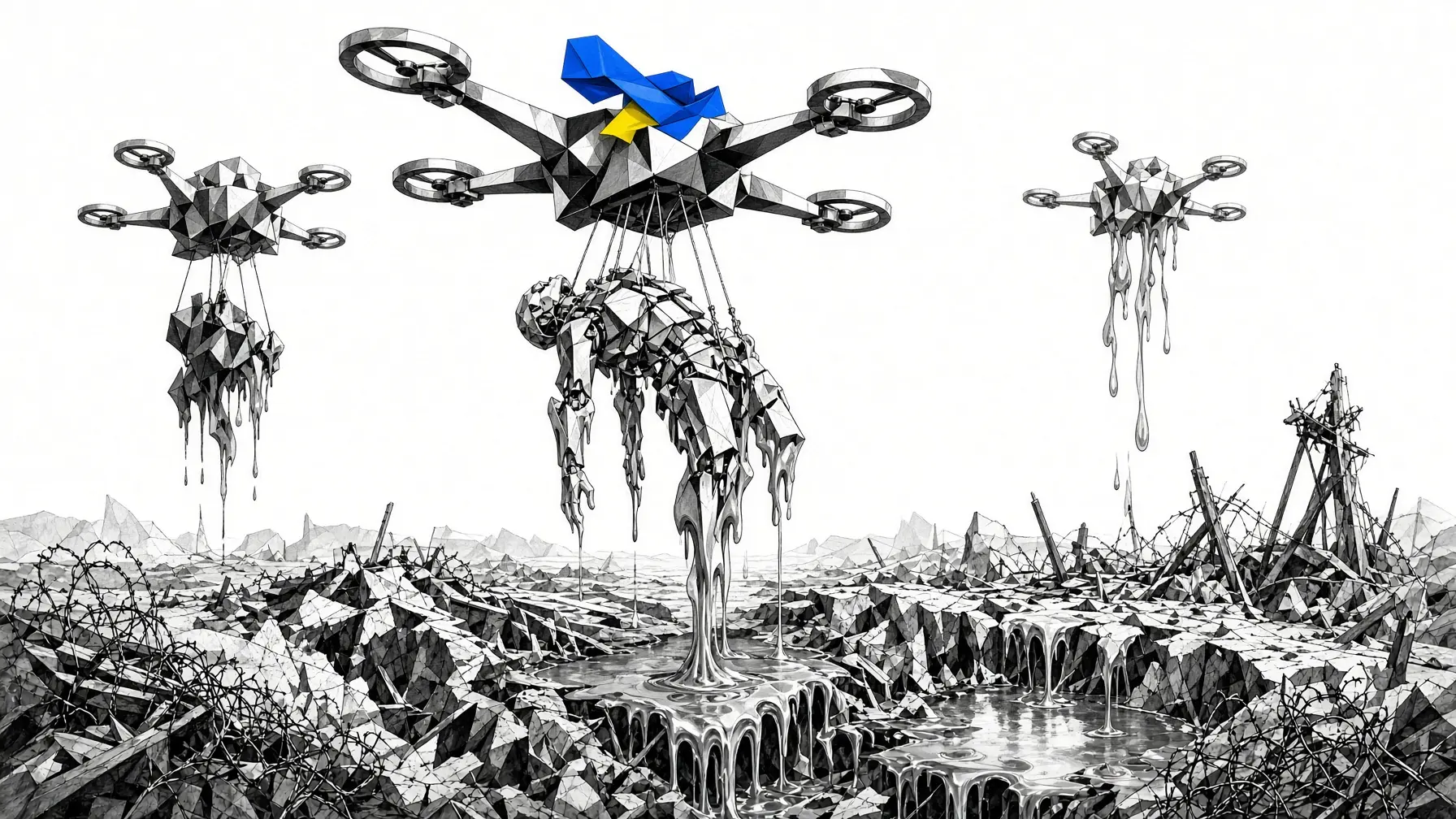
World first: flying drones deliver Ukrainian combat robots behind Russian lines
Ukraine's Third Army Corps announced that during Operation Vivaldi, 125 square kilometers of territory were brought back under Ukrainian control in the Lyman area, in the northern part of Donetsk region. One of the operation's most important innovations was that large flying drones carried explosive-laden ground combat robots more than ten kilometers behind Russian lines.

Artificial intelligence used to detect underground pipe leaks in Buzău
The regional water utility in Buzău County has reduced network water loss using AI-supported noise sensors. The system monitors the sounds and vibrations produced by water escaping from pressurized pipes, then uses the data to identify areas where a hidden pipe break or leak is likely located.

Black Sea grain trade grinds to a halt, wheat prices rising worldwide
The maritime dimension of the Russia–Ukraine war has effectively paralyzed one of the world's most important grain export routes. In recent months, the Russian army has intensified its attacks on Ukrainian ports, grain terminals and transport hubs, while Ukraine has responded by targeting Russian ports, cargo ships and logistics facilities. The result: more than 97 percent of Russian and…
No matter what other name we give it, we are, in fact, at war!
Information war, cyberwar, hybrid war, shadow war, sub-threshold operation: Europe is finding ever more linguistic ingenuity to describe what Russia is simply waging against it as war. Sylvie Kauffmann, foreign affairs columnist at Le Monde, argues that this verbal magic must end, because as long as the attacks are called "incidents", "provocations" and "hybrid threats", we never even get to the…
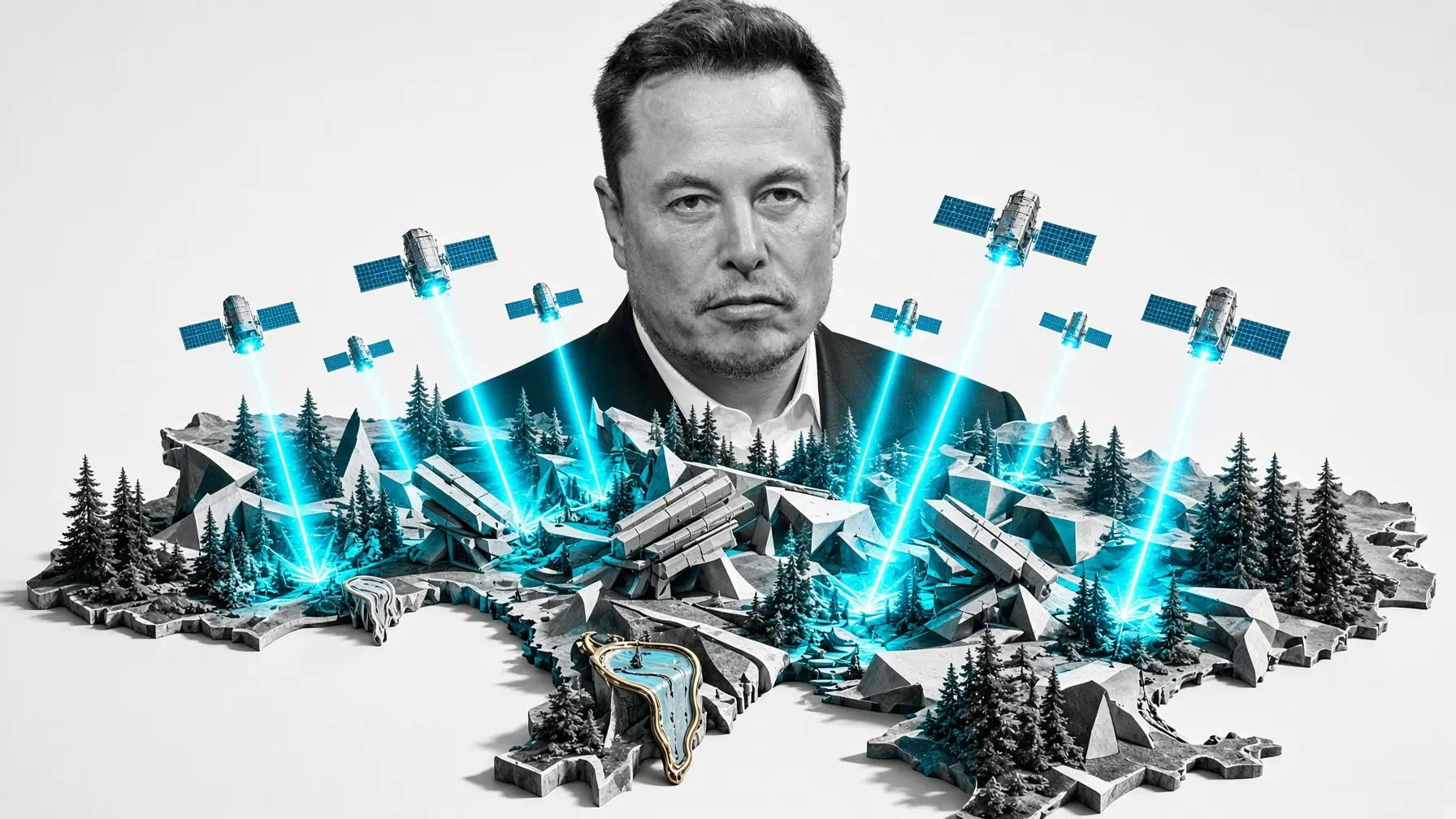
Finland asks Musk for help: Starlink could be used to hunt down Russian missile launchers attacking Ukraine
Finnish President Alexander Stubb has asked Elon Musk to extend Ukraine's use of the Starlink satellite internet service to Russian territory as well. This would allow the Ukrainian army to use drones controlled via satellite link to attack the mobile Russian missile launchers from which ballistic missiles are fired at Ukrainian cities and energy infrastructure.