Hezbollah's Venezuelan money machine: the intertwining of political protection and terror financing
According to terrorism researcher Magnus Ranstorp, understanding Hezbollah's presence in Latin America requires examining above all the financial and logistical backdrop that allows the organization to operate. His analysis, published on Engelsberg Ideas on September 30, presents Venezuela as a rear base where state support, organized crime and certain actors in the legal economy complemented one another, providing money, documents, transport routes and political protection to the networks of the Iranian-backed organization. According to the author, the weakening of this rear base narrows Hezbollah's room for maneuver, while at the same time making its web of connections more fragmented and harder to trace.
Venezuela as a protected financial safe haven
Ranstorp opens his essay with the arrest, on January 3, of Venezuelan President Nicolás Maduro and his wife, Cilia Flores, by the United States. He describes the operation as action taken over drug trafficking and cooperation with groups designated as terrorist organizations by the United States, but notes specifically that Hezbollah does not appear among the charges. The essay examines the broader web of connections that has long tied the Iranian-backed Lebanese organization to Venezuela and other Latin American countries. According to Ranstorp, Hezbollah's presence became embedded in the functioning of the Venezuelan political system: it helped the organization raise funds and adapt to international restrictions, while also contributing to the expansion of Iranian influence in the Western Hemisphere.
The author examines institutional collapse, economic crisis, hyperinflation, shortages of goods and repression together as an explanation for why Venezuela became a favorable operating environment for these networks, presenting the fate of the more than seven million people who have left the country as a social consequence of this same system. Official institutions weakened, while political loyalty continued to provide protection to select actors. According to the essay, people close to the regime provided identity and travel documents as well as logistical assistance, while criminal networks supplemented this support with cash, smuggling routes and money-laundering services. According to U.S. official estimates, Hezbollah's annual revenue from crime is roughly three hundred million dollars, while its total budget is put at between seven hundred million and one billion dollars. Criminal activity thus provides roughly a third of its funding, or an even larger share according to some estimates, while the most important source of the remainder is Iran. The three hundred million dollar figure refers to Hezbollah's total criminal revenue, not solely to money generated in Venezuela. Among Hezbollah's Latin American connections, Ranstorp highlights drug trafficking, particularly the route of Colombian cocaine; he sees Venezuela's importance primarily in terms of political protection, the provision of documents, access to the gold trade, and the opportunity to circumvent sanctions.
Buenos Aires and the Triple Frontier
Ranstorp illustrates the historical significance of Hezbollah's presence in Latin America with the attack on the Israeli embassy in Buenos Aires on March 17, 1992. The bombing killed twenty-nine people and wounded more than two hundred. Argentina's Supreme Court later established Hezbollah's responsibility; the support of Iran's Revolutionary Guard and Ministry of Intelligence for the attack was also uncovered, and the operation's direction was linked to Imad Mughniyeh, one of Hezbollah's leading figures. Ranstorp also recounts his own experience: he assisted the investigators as an expert familiar with the organization's structure, methods of operation and ties to Iran. From his conversations with intelligence officers at the time, he concluded that Hezbollah's presence in Latin America had been known well before the attack. In his interpretation, the attack on the embassy also showed why such an organization needs safe rear bases: places where it can raise money, move people and prepare its operations far from the sites of its attacks. In Venezuela this later developed into lasting infrastructure reinforced by state connections, though the regional network extended far beyond the country's borders.
In 2003, Ranstorp traveled to a government counterterrorism conference in Puerto Iguazú, Argentina, in the region where Argentina, Brazil and Paraguay meet. This Triple Frontier region has regularly surfaced in international investigations since the mid-1990s. He describes the nearby Paraguayan city of Ciudad del Este as a trading hub where the mix of markets, counterfeit goods, cash transactions and cross-border shipments is particularly conducive to concealing the origin of money. He illustrates the city's economic weight with an extremely high estimate that links sixty percent of Paraguay's GDP to Ciudad del Este — in his argument, the combination of high-volume trade and weak oversight plays a decisive role. The author describes this environment as a “criminal service economy,” in which entrepreneurs, carriers, money changers, logistics organizers and groups collecting protection money perform complementary tasks. According to the intelligence sources he cites, networks linked to Hezbollah may earn revenue from black-market trade, launder it through commercial transactions and money changers, and then transfer it to Lebanon. In some cases he also mentions money flows linked to Hamas. The Triple Frontier thus emerges as an important arena for raising and moving money, with Venezuela connected to it as a rear base providing further political protection and logistical opportunities.
Chávez, Iran, and Margarita Island
According to Ranstorp, Venezuela's role strengthened after Hugo Chávez came to power in 1999, and grew further under Maduro's presidency, which began in 2013. He sees the political basis of this cooperation in a shared antagonism toward the United States and Israel, which, despite their differing ideological backgrounds, drew the Venezuelan socialist leadership, Iran and Hezbollah closer together. In this relationship, Hezbollah acted as a financial and logistical intermediary supporting Iran's presence, while Venezuela facilitated the movement of individuals linked to the network through visas, travel documents and other state resources. Citing the Senate testimony of a former U.S. Treasury official, the essay states that Chávez opened the country to Hezbollah as early as 2002–2003. Training camps were set up on Margarita Island, and activities supporting the organization's operations were also identified there. Ranstorp explains the island's importance by its free-trade status, its Caribbean location and the weakness of state oversight. In describing the social and economic ties that these networks could exploit, he mentions the island's roughly thirteen thousand residents of Middle Eastern origin, including Lebanese Shiites.
Marshall Billingslea, a former senior U.S. Treasury official responsible for countering terrorist financing, describes Margarita as a hub for money laundering, document forgery and smuggling, where the illegal trade in alcohol, electronics and gold also played a role. Citing terrorism researcher Matthew Levitt, Ranstorp also writes that thousands of fraudulent Venezuelan identity documents were issued to people from the Middle East. These could have made it easier to obtain passports and to travel internationally with less scrutiny. The financial backdrop and the documents together provided the conditions for operations: alongside the transfer of money and goods, they also enabled the international movement of people.
The air link and the Cassandra investigation
As one of the earliest documented milestones in the political relationship, Ranstorp cites a meeting Maduro held with Hezbollah representatives in Damascus around 2007 — it was in this same period that the Caracas–Damascus–Tehran air link was established. According to the intelligence reports described in the essay, this route handled passenger transport and logistical tasks for Iranian security agencies, the Revolutionary Guard, the Ministry of Intelligence and Hezbollah, with the Venezuelan state airline Conviasa providing assistance for these trips. Regarding cargo carried on Iran Air and Mahan Air flights, the reports also mention weapons and drugs. In uncovering the financial connections, Ranstorp considers the DEA's Project Cassandra, launched in 2008, to be decisive. The investigation aimed at dismantling drug-trafficking and money-laundering networks linked to Hezbollah. According to the essay, it showed that Margarita functioned as a rear hub where proceeds of crime could be converted into money usable for the organization's operations, often with the tacit consent of Venezuelan authorities. The DEA's findings, as presented in the essay, linked cocaine trafficking from South America to Europe and the Middle East, money laundering through car dealerships, cash handling and informal financial channels to Hezbollah's political and military organization.
After Chávez's death and the consolidation of Maduro's power, especially under the mounting sanctions pressure that intensified from 2017 onward, Venezuela, according to Ranstorp, became even more important for networks seeking alternative financial solutions. Alongside gold smuggling, cash settlements and cryptocurrencies, seemingly legal business activities also played a role: trade in textiles, beef, charcoal and electronics, tourism, real estate and construction. These offered channels through which illegal proceeds could enter the formal economy.
Family networks between the state and the shadow economy
In describing the structure of Venezuela's web of connections, Ranstorp relies on a report by the Atlantic Council. It describes the Rada, Saleh and Nassereddine family networks as part of a larger international system of financiers and intermediaries. According to the essay, the Nassereddine network became directly embedded in the institutions of the Venezuelan regime, while the Rada and Saleh groups, operating seemingly outside the government, connected certain elements of money, goods and arms flows between Venezuela, Lebanon and Syria. Ranstorp sees the significance of these actors in the fact that, through their particular connections and specialized services, they linked Hezbollah, the state-linked shadow economy and the legitimate business world. The different family groups performed distinct tasks, but together they provided a backdrop that supported both the Venezuelan regime and Hezbollah's international activities. Through these intermediaries, actors could cooperate even where no direct, easily documented institutional relationship necessarily existed between them.
How the networks adapted to sanctions
The author treats the 2019 U.S. sanctions on the state oil company PDVSA as another turning point. The company was one of the regime's most important sources of foreign currency, and the restrictions further narrowed Venezuela's access to the international financial system. The essay places the European arms embargo, asset freezes and travel bans within this same growing isolation. According to Ranstorp, the pressure pushed the networks involved toward more organized and sophisticated operations: instead of ad hoc solutions, they developed financial procedures that could be used routinely, could handle larger volumes, and were harder to trace. The essay highlights three methods that can be combined with one another. In trade-based money laundering, over- or under-invoicing and fictitious shipments make money movements appear as legitimate business payments. Multi-step transactions carried out through intermediaries and front companies obscure the path of the money from its original source to its final beneficiary. Systems that combine various financial channels bring together cash, informal transfers and, in some cases, digital assets. According to Ranstorp, the effect of sanctions must always be examined together with the networks' capacity to adapt, since closing one route can also spur the emergence of new intermediaries and new settlement methods. Over time, this financial backdrop evolved into a system linking multiple countries, economic sectors and payment methods. The place where revenue is generated, the business transactions that obscure its origin, and its final use can thus end up geographically and organizationally far apart, which considerably complicates the work of the authorities.
The weakening of the rear base does not mean the end of the network
In the closing section of the essay, Ranstorp assesses the U.S. actions that led to the January arrest of Maduro and his wife as a process narrowing Hezbollah's room for maneuver. In his view, the relatively predictable protection that Venezuela had previously provided has weakened: operations have become more expensive and uncertain, and the country's financial and logistical advantages have diminished. Since he considers Hezbollah's presence in Venezuela to be fundamentally financial and logistical in nature, he describes the change as a gradual narrowing of opportunities. This in turn increases the importance of intermediaries and other regional hubs. Citing U.S. expert testimony, he also mentions Nicaragua and Bolivia as secondary regional points of connection for Tehran. According to Ranstorp, stricter controls, sanctions and strengthening intelligence cooperation in Latin America and Europe are making it harder for the actors serving these networks to operate, and are raising the cost of their protection; however, he does not conclude from this that Hezbollah is withdrawing from Latin America or that its network is being fully dismantled. He draws an important distinction between a shrinking of room for maneuver and the end of activity: the organization's financial system may become more vulnerable, while continuing to operate in a more fragmented, less centralized form.
The author's final conclusion is therefore twofold. Venezuela no longer offers as secure a rear base as it once did, and the network's operations can be disrupted at several points, yet the system of numerous intermediaries and alternative routes becomes more complicated to uncover. Ranstorp shows that Hezbollah's operations are made possible by the combination of political protection, revenue from crime, documents and commercial infrastructure. The reconfiguration of these ties also changes the nature of the threat: as the former hub weakens, the organization increasingly relies on intermediaries whose roles and relationships to one another become ever harder to map.
Did you like this article?
Support our work with a small donation
Secure payment via Stripe • Min. 2 EUR
Gesta recommendations:

Rubio backs Guilfoyle: a green light for toppling governments in Europe?
U.S. Secretary of State Marco Rubio has publicly voiced his support for Kimberly Guilfoyle, the United States ambassador to Greece, after senior Democratic lawmakers called for an investigation into the diplomat's activities. According to a report by G4Media, the objections relate to the promotion of U.S. liquefied natural gas sales in Southeast Europe and to the ambassador's dealings with…
Albanian PM: Ukraine's EU membership is a lie
Albanian Prime Minister Edi Rama, in an interview with Die Welt, called the EU accession promises made to Ukraine a lie, because in his view, under the current conditions and following the usual procedure, the country will never be admitted. According to him, everyone knows this, and European officials even admit in private that the standard accession process is unsuitable for handling the…
Putin wants Kyiv evacuated so he can bomb it in peace
Russia has once again called on foreigners and diplomats in Kyiv to leave the Ukrainian capital, warning that the Russian army will continue its mass attacks. Saturday's statement from the foreign ministry even added that anyone who ignores the warning bears full responsibility for the consequences. What considerate killers: they warn in advance that they're going to shoot, and then it's the…
Axios: Trump's team held closed-door talks on next steps against Iran
Several senior officials of the U.S. administration held a meeting lasting several hours at Camp David on Friday on the next steps regarding the war with Iran and the Houthi rebels in Yemen, Axios reported, citing three American officials. The administration did not announce the meeting and provided no details about the military or diplomatic options discussed there.
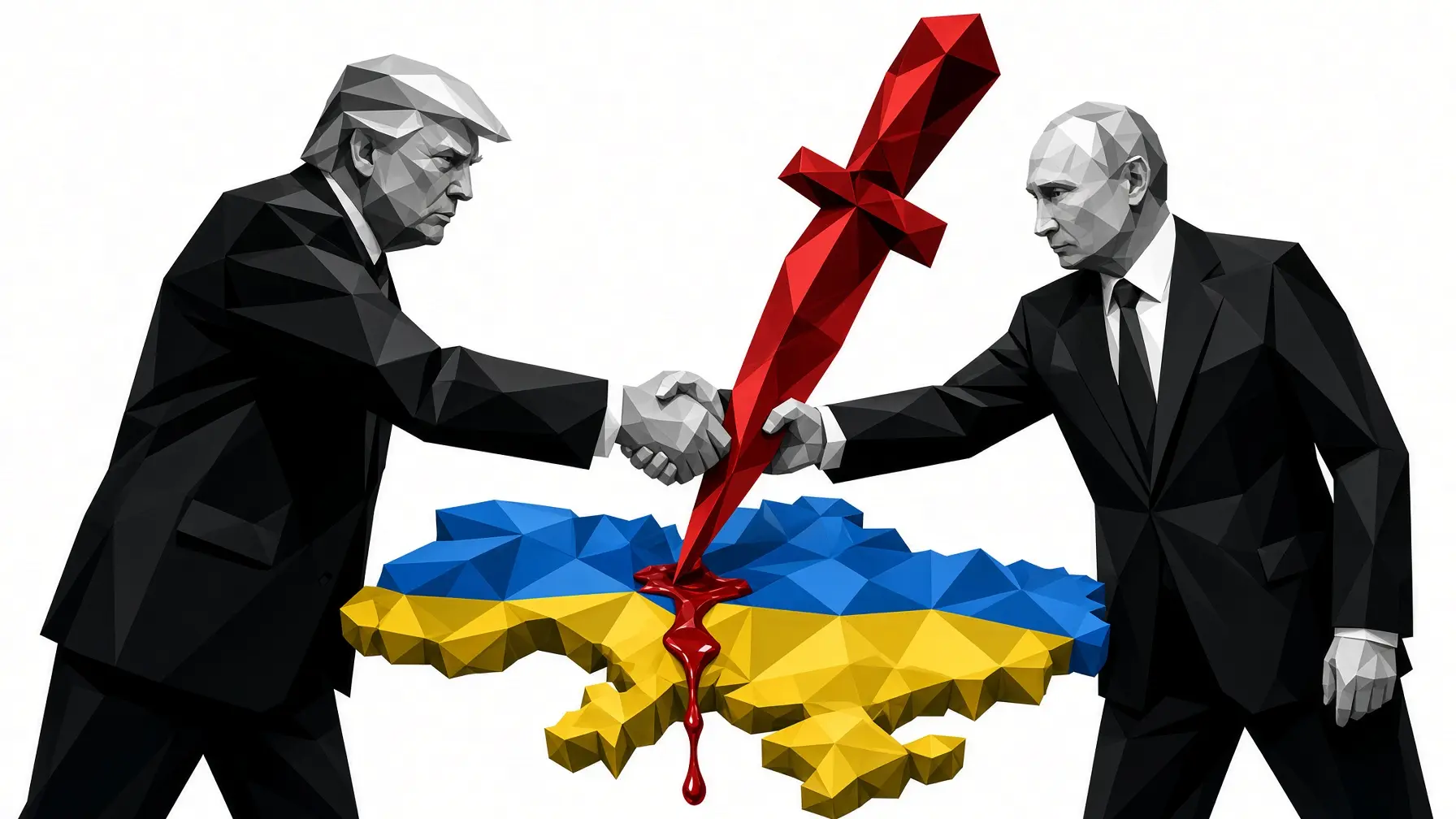
Here is the US-Russian deal that stabs Ukraine in the back
The American-Russian negotiations on ending the war in Ukraine also extend to a multibillion-dollar oil deal, among whose potential beneficiaries are Donald Trump's supporters as well as Middle Eastern investors linked to the business networks of the two chief American negotiators, Jared Kushner and Steve Witkoff. This was revealed by Anton Troianovski and Eric Lipton, two journalists at The New…