Don't abandon our villages! Hungarian islands in the sea of reform
Today, another statement by Dragoș Benea made headlines, yet Hungarian public opinion quietly let it slide. Benea is the PSD lawmaker who heads the party's working group on the territorial-administrative reform, meaning he carries significant weight in determining the direction of the entire process, and his words also give a good indication of how serious the governing party's intentions really are. As for the latter, it should already be telling enough that Grindeanu, the party's chairman, intends to push the law through by assuming parliamentary responsibility for it—meaning he is risking his own downfall just to finally get the reform done.
This is not Romania's first attempt to redraw the country's map, and a great many analysts believe that the current one is nothing more than another political product. I have already written elsewhere about why I don't see it that way. A few key points: there is no money in the state treasury, and the sum that would be saved this way, even if not huge, is at least noticeable; the EU is also becoming increasingly strict when it comes to funding applications, and Brussels will no longer watch so indifferently as wannabe petty rulers across Eastern Europe plunder EU funds to build their own power complexes, which then turn against the Union's unity—Viktor Orbán was a good lesson for them too; the reform was already missing back in the old, peaceful times, and even then money was lost because of its absence, which could have far more serious consequences in the future; the PSD is currently the only party in government, and given that the reform is unavoidable, this is the moment when it can carry it out with the smallest possible self-inflicted damage. This last point could even prove decisive.
According to Benea's statement today, if the PSD does not see the reform through, it will come back like a boomerang—and in this he is undoubtedly right: without territorial-administrative reform, Romania's development will stall and then slide downhill, and this decline will be lasting, moreover traceable to an internal cause, unlike the current difficult economic situation, which does have countless external causes as well.
I'm not saying reform is certain, but I would firmly argue that we have never been this close to it—which, in Romania, still guarantees nothing, yet we, the Hungarians, and above all our single party, should act far more intelligently and cautiously than we currently are. From our intellectual elite, mostly bluster has been heard so far, but there is no sign of serious planning anywhere in the Transylvanian Hungarian mental space. The SZNT (Szekler National Council) and one of RMDSZ's sub-units have jointly launched a petition that the hundred-odd mayors of Szeklerland are supposed to sign, after which Szeklerland would belong to a single region—however comical the petition may be, it is at least something. As an addition: the local councils of the settlements (in the terminology used by Hungarians in Romania: 'councils'—'council' being a Soviet-era word that stuck with us from communist times) must vote to approve their merger; signing a petition is not enough for that—but at least they have made an intention clear, behind which they now want to build political will. At moments like this I can only ask: why do we even have RMDSZ, if this is where we now have to start from?
The other problem is that this action gives no answer to the question of what will happen to the Hungarian villages outside Szeklerland. As Ugar previously modeled, these are the ones most exposed to assimilation. If these small Hungarian islands disappear, it is only a matter of time before the Hungarian voices of Mezőség fall silent, before Kalotaszeg drops off our mental map, and before the Transylvanian areas outside Szeklerland turn completely into Southern Transylvania.
This is exactly why, beyond formulating our demands—nota bene: maximizing them—we also need to know what the minimum is, without which we will not let this territorial-administrative reform be forced down our throats. Yes, one could ask that the Hungarian villages living in the Romanian sea remain INDEPENDENT territorial-administrative units, that is, that they not be merged into anything. Of course, this requires a viable economic plan with which these villages can prove that, within a foreseeable timeframe, they can become at least self-sustaining—this is in our own interest too, since otherwise, no matter how admirable a resistance we put up now, these villages will die out anyway. Such a plan requires intelligence, knowledge, professional competence and a great many creative ideas—the ability to think outside the box. That RMDSZ lacks this, we have known for a long time. That the Transylvanian Hungarian elite lacks it too, we are now learning the hard way.
There is nothing more important than our villages!
No matter how city-obsessed the Transylvanian Hungarian high-intellectuals—urbanized over recent decades—may be, along with the not-so-high and barely intellectual types who imitate them, the fundamental structural unit of Transylvanian Hungarian society is the village. Our Hungarian villages supply the next generation—a commonly cited example: the Hungarian community of treasured Cluj-Napoca (Kolozsvár) would have vanished long ago if many of the young people from Szekler, Mezőség, Kalotaszeg and Partium villages and small towns who studied there had not settled down there. The greatest sin of the Transylvanian Hungarian social engineers, but above all of the Transylvanian Hungarian political class, is that our villages were never given the place they deserve—I fear this omission will prove fatal for us, because the future points exactly in that direction, and a sensible person prepares for the future rather than sweeping today's problems under the rug.
Urbanization is, in fact, undergoing a transformation. It's not that it is declining globally: according to 2025 UN data, 45 percent of the world's population lives in cities today, compared to only 20 percent in 1950; over the same period, the share living in small towns fell from 40 to 36 percent, while the share living in rural areas dropped by half, to 19 percent. What has stalled, however, is concentration in big cities: the population is spreading out around them. The same pattern holds in Europe—the population of cities and their commuting zones is growing, but faster outside the city boundary, while rural areas in Southern and Eastern Europe are shrinking. (See HERE!) In Romania, since 1997 more people have moved from cities to villages than the other way around; during the two pandemic years, around 250,000 people moved to rural areas, and Cluj-Napoca lost nearly 38,000 inhabitants in ten years, as many moved into houses in the surrounding settlements. The catch is that these are not distant villages: according to a ranking based on 50,000 listings, the second most expensive housing market is Voluntari, and the third is Baciu (Kisbács) in Cluj County, with a price of 2,471 euros per square meter. Villages near cities with proper infrastructure are the winners; those in Mezőség, Szeklerland and Partium will not become so on their own.
Housing in big cities is hard to come by, which in itself limits people's existential prospects; here in Transylvania, this plays out in the following ways:
the parents sell whatever land they have back home in the village, plus the offspring has a good job in the big city; the proceeds from the land become the down payment, and based on the salary a bank loan follows, and this is how they buy an apartment in a block of flats, which they can then keep paying off for 30 years. In Cluj-Napoca, the average price per square meter was 3,298 euros in July 2026, meaning a 52-square-meter, two-room apartment costs roughly 171,000 euros.
the other variation is that they go abroad, to the West. Yes, the declining West—or, as I like to put it with no small irony, the 'West on the wane'—still remains an escape option, though fewer and fewer people return home from there these days.
and the rarest pattern observed: after roaming and adventuring in the big city, the offspring returns. Here too it's worth making a distinction, since they rarely return to the village itself, perhaps instead to a nearby small town—someone from Porumbeni (Galambfalva) or Căpâlnița (Kápolnás) is more likely to end up in Odorheiu Secuiesc or the Ciuc area, and only a tiny fraction move back to their home village, where they then go on living together with their children.
Yet the future points in exactly this direction, and if I look at how empty our villages are and add to that the housing crisis facing young people, the solution is almost self-evident.
Except it's not quite that self-evident after all: these villages would need to have a minimum level of development—internet access is a basic expectation nowadays, but so is the matter of work, that is, earning money, as is medical care available locally or nearby, how long it takes an ambulance to arrive in winter, and whether transport to the nearest city, train station, or—why not?—airport is properly arranged, and so on. Our last two decades, ever since Romania joined the EU, should have been about exactly this—and our villages have undoubtedly developed, but nowhere near enough to meet the needs of today's young people, and we are even further from the level we could have reached given all the EU money—I have written this before, I have said it many times, and I will repeat it: never in human history, and certainly never in the case of Szeklerland and Transylvania, has there been a period when so much, so very much free money was poured our way.
And we did not make use of the opportunity.
Our villages are not attractive because they are not developed enough, and they are not developed enough because our political elite failed to exploit the opportunities offered by EU funds. The roads are bad, public transport is disorganized, local petty despots throw their weight around, in Szeklerland there is the wage cartel and artificially suppressed wages—and we haven't even mentioned the rest of the infrastructural difficulties yet.
A case study is Valea Uzului (Úzvölgye). In 2002 it still had nine inhabitants, by 2011 only three, all of them Hungarian, and the last Hungarian moved away in 2017. He left because by summer he could no longer store even a week's worth of food: he had no fridge, and he had no fridge because electricity had never been brought to the village. In the 21st century, in an EU member state. Then in 2019 Romanians got a taste of it—and did not let go.
Szeklerland has more than its share of such impossible situations, and it's a problem across Transylvania as well—while a significant portion of our villages lie within a reasonable commuting distance of some city (if there were organized and predictable public transport), meaning that a return to village life could substantially ease the housing crisis. Of course, this would require, at minimum, good transport links, locally available medical care, and the rest. As things stand, however, our villages are not attractive, and since our villages are dying out, we are dying out along with them.
In this context, it hardly matters whether we're talking about a village or a commune. The point is that just as our elites squandered the opportunities created by EU accession, they will likewise prove unfit to handle the territorial-administrative reform. We started from the premise that the Hungarian village, the 'Hungarian island,' should remain an independent administrative unit—but to achieve this, it would need to prove that within the coming years it can become at least self-sustaining, or substantially cut its costs. And for that, a viable economic plan is needed: not the kind of applications that Viktor Orbán approved at Pro Economica and the BGA, but concrete development plans.
I fear that the abilities needed for this have been lost.
Anna Karczag/Ugar
Did you like this article?
Support our work with a small donation
Secure payment via Stripe • Min. 2 EUR
Gesta recommendations:

Russian method: if you can't stop Ukrainian drones, ban talking about them
Under a legislative package submitted on November 26, publishing information about the consequences of Ukrainian strikes without official authorization could carry a prison sentence of up to five years in Russia, a bill that has outraged even some military bloggers who are enthusiastic supporters of the war. The draft invokes the defense of the state, while it could also serve to reduce the…

No EU budget, no money for Ukraine either
No agreement was reached on either the European Union's next seven-year budget or the new €45 billion loan planned for Ukraine at the extraordinary summit held in Brussels, which ended early Friday morning. Twenty-four member states lined up behind the loan proposal, but Hungary, Czechia and Slovakia stayed out, while the German chancellor is increasingly openly linking the distribution of EU…

London is looking for its reservists, but it has no contact details for tens of thousands of people
For the first time since the Cold War, the British Ministry of Defence has launched a comprehensive outreach to former soldiers of the strategic reserve to clarify where they can be reached and what experience they have gained since leaving service. The state of the records immediately proved the need for this preparation, since according to reports so far, out of roughly 95,000 people affected,…
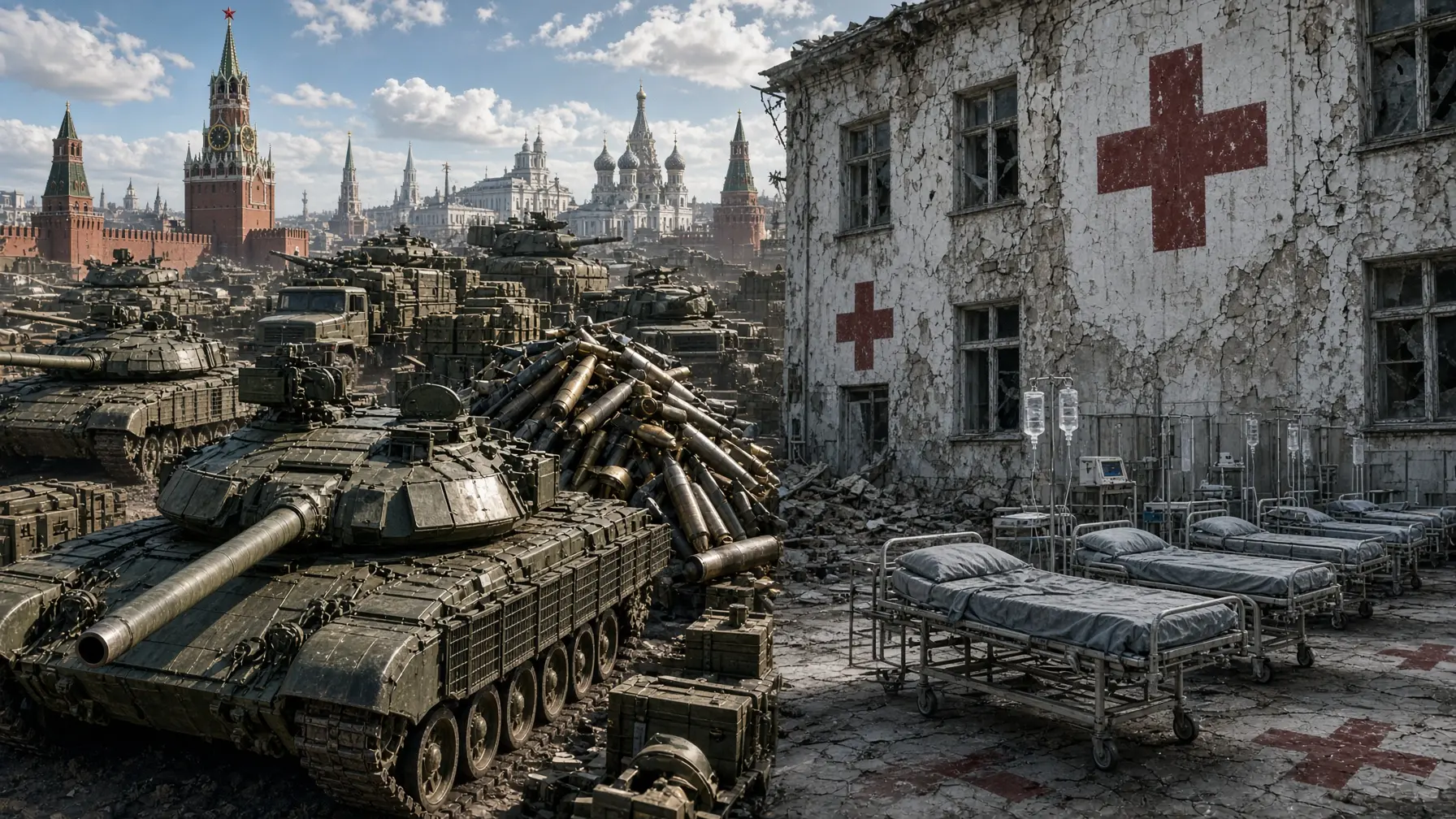
How Moscow is preparing for peace: a record sum for the army, less for hospitals
While the Kremlin talks about its desire for peace and keeps expecting further concessions from Ukraine, the Russian parliament has approved military spending for the next three years on a scale unseen since the Soviet Union. Under the 2027–2029 budget, the equivalent of some 606 billion dollars is earmarked for the army, while spending is being cut on health care, social benefits and housing.
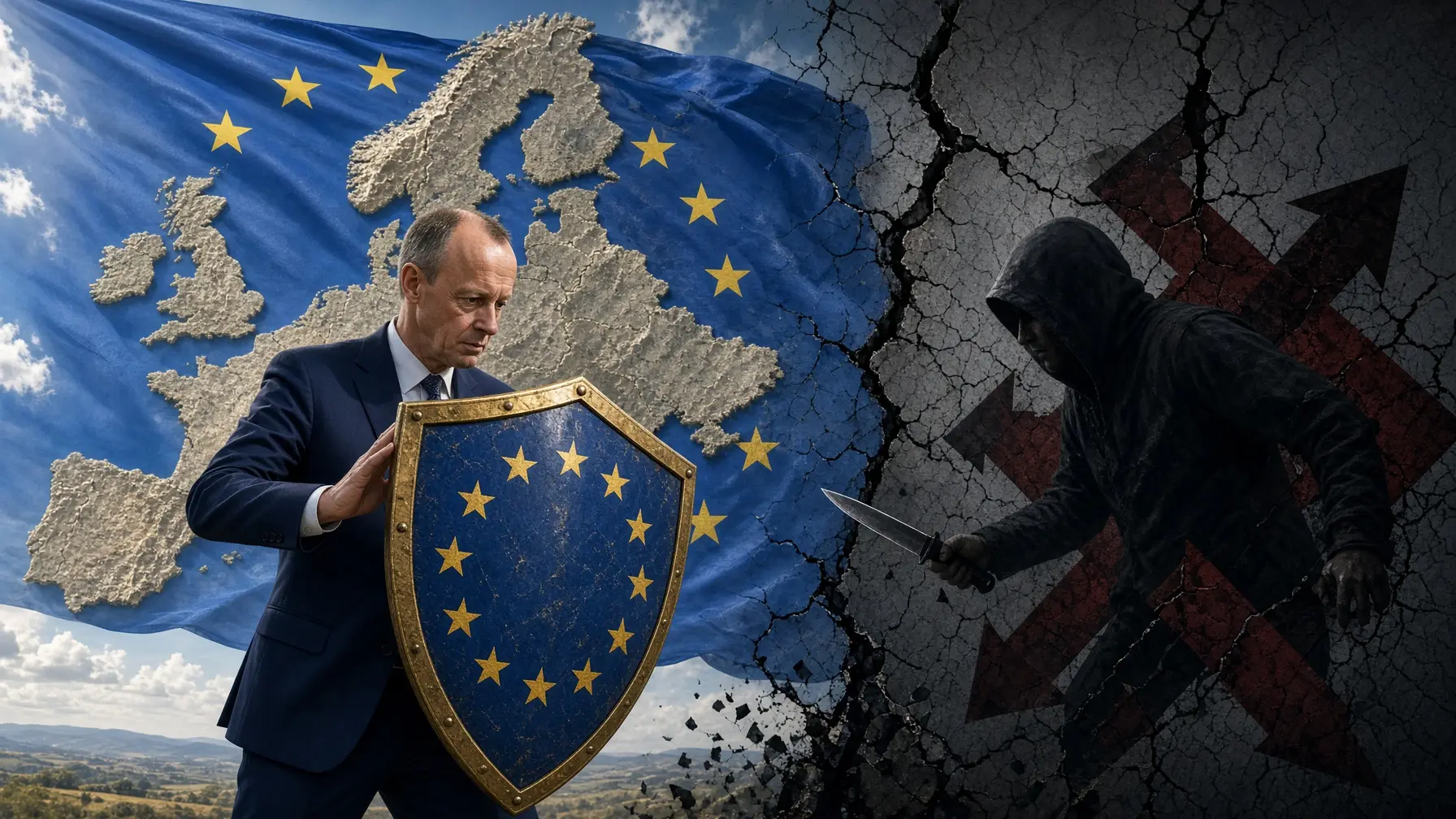
Merz would defend Europe, the AfD would stab us in the back
German Chancellor Friedrich Merz, during the Bundestag's budget debate, warned that Russia's threat extends far beyond Ukraine, and that Germany therefore cannot treat it as a distant war when its consequences have already appeared on its own territory. While the government justified spending on defense and support for Ukraine, the AfD, unsurprisingly, once again concluded that savings should…