Trump on Hitler's path: a gift of sanctions relief for Putin
On Friday evening, October 9, Donald Trump announced that the United States will buy Russian diesel and that the world market will also open up to Russian fuel. The president, who thanks to God's peculiar sense of humor is once again commander-in-chief of the world's strongest army, described his hour-and-a-half phone call with Vladimir Putin, with his usual modesty, as extremely successful. Yuri Ushakov, the Kremlin's foreign policy adviser, also revealed that during the call Trump warmly wished the Russian president a happy birthday. This is a notable gesture insofar as on Putin's 74th birthday, October 7, the Russian army attacked Ukraine with 48 cruise missiles, ballistic missiles and 130 drones, killing at least thirty people, including five children, according to the Kyiv Independent. An autumn romance is thus blossoming, pushing the two great powers into each other's arms — and as with such romances in general, it is the rest of the world that pays the price.
Trump has told so many untruths that the pro-Ukrainian Western public first waited for the Kremlin to confirm the news, and did not really believe it until TASS had reported it. Then the Russian side spoke up too: according to a Kremlin statement, Moscow is ready to supply oil and petroleum products to the American and world markets, and Deputy Prime Minister Alexander Novak told TASS that they would immediately begin lifting the Russian diesel export ban imposed in July. Washington didn't hesitate either: the Treasury Department issued General License No. 135, which permits the sale, transport, unloading and import into the United States of Russian-origin diesel until April 7, 2027. According to the department, the license also extends to the world market, meaning Western ports too could open up to Russian fuel. EU and British sanctions remain in force for now — at least until Europe's Putin sympathizers, whose cognitive abilities are not exactly their strongest point, start demanding the same thing more loudly.
A drop in the ocean of oil, a goldmine for the Kremlin
According to Trump, Russia will immediately ship more than 300,000 tons of diesel, another 500,000 in November, then a million tons, and after that up to three million more depending on the state of the refineries. The first three shipments add up to 1.8 million tons, roughly 13.5 million barrels, while all four together come to 4.8 million tons, about 36 million barrels. According to data from the Energy Information Administration, the American economy consumes roughly 3.8–4 million barrels of distillate — that is, diesel and heating oil — per day, so the first three shipments would cover about three and a half days, and the full package about nine. And that's only true if the United States were to buy up all of it, which, given that the license covers the world market, is unlikely to happen — especially since the same American economy set a record in August with diesel exports of 1.9 million barrels a day. Measured against the world market, the proportions are even more ridiculous: according to the International Energy Agency, global oil supply this year runs at roughly 102 million barrels a day, so 36 million barrels amounts to about eight and a half hours of production. Last week, under pressure from Trump himself, the G7 countries released 100 million barrels of diesel and other products onto the market through the International Energy Agency — in other words, nearly three times as much as Trump hopes to get from the entire Russian package.
The market assessed the announcement accordingly. The president argued that diesel prices would fall at record speed and that everyone would benefit, but traders clearly booked this as the usual Trumpian exaggeration. Diesel futures fell by roughly four percent on Friday, but even so remain more than 110 percent above the level seen at the start of the year, while the price of Brent crude, at around $104, barely moved at all.
The real stake is not American purchases but the fact that Moscow is lifting the July export ban, which according to CNN had taken roughly 800,000 barrels a day off the market. That ban, however, was not forced by Western sanctions but by Ukrainian drones, which had drained Russia's domestic market. According to RFE/RL, Russia is struggling with a fuel shortage unseen in years, and analysts doubt that Moscow can even deliver on its promises. On October 1, at the Valdai Club, Putin was still insisting that Russia had plenty of diesel and was simply unable to get it onto the world market because of sanctions. According to Reuters, Kirill Dmitriev, the Russian president's envoy, visited Washington in September and requested permission for all major Russian oil companies to sell diesel in the United States. On Friday he got what he asked for, and immediately took to X to call Russian-American energy cooperation beneficial for the whole world.
Even more important is what might come next. Russian refineries were built almost without exception on Western technology: according to Reuters' Russian industry sources, the American company UOP and the Swiss firm ABB supplied equipment and software to the forty largest plants, and the deep-conversion units are manufactured under Western licenses. These companies have fulfilled no new Russian orders since the 2022 invasion, which is why repairing units destroyed by Ukrainian drones takes months instead of weeks, or sometimes doesn't happen at all. According to Sergey Vakulenko, former head of strategy at Gazprom Neft, drones are ten, if not a hundred, times cheaper than repairs — a decisive difference in a war of attrition. And although the wording of the current American license concerns diesel trade and does not lift the export ban on refinery equipment, the Kremlin has now learned that in Washington it's enough to ask nicely — and if the next request concerns specialized parts, Ukraine's drone campaign, one of its most successful weapons in the war, could lose its effectiveness within a few months. Russia, after all — whatever Putin sympathizers may say about the fabulously rich Russian soil, which supposedly contains the entire periodic table — has never managed to build a single modern refinery on its own, and that's no accident.
Molotov–Ribbentrop, except Trump gets nothing for it
According to Axios, Trump struck his deal with Putin after Volodymyr Zelensky had ignored the American request roughly six times to stop attacking Russian refineries. An unnamed American official said the president wanted Ukraine to unilaterally halt these strikes, believing they were driving up American fuel prices. The official also argued that Ukrainian strikes on Russian refineries cannot be put on the same level as Russian strikes destroying Ukraine's power grid — as if a power plant that heats hospitals and homes in winter mattered less than a refinery producing diesel for the front. Zelensky replied that Kyiv was ready to stop striking the refineries if Russia stopped shelling Ukrainian power plants, and he called the diesel deal unfair and dishonest, adding that no one had informed him in advance.
Trump has been blaming the Ukrainians for rising diesel prices since September, but the numbers tell a more nuanced story. According to an August report by the International Energy Agency, the decline in refining capacity was caused both by attacks on Russian refineries and by disruptions in Middle Eastern product exports. According to NBC, diesel prices have risen by roughly 70 percent since the war against Iran began in February — the very war Trump himself started. Such a crisis is, of course, easier to blame on Ukrainian drones than to explain to voters.
After Zelensky's firm response, the pressure campaign escalated. Citing a Ukrainian official, Axios and the Financial Times reported that at Friday's talks in Miami, Steve Witkoff and Jared Kushner threatened the Ukrainian delegation, saying Trump could cut off Ukraine's access to American intelligence data if Kyiv continued to ignore his requests. An American official told Axios no such threat was made and that the delegates only asked Ukraine to avoid steps that would harm American consumers — which is essentially an admission that they really did try to pressure the Ukrainian delegation. Kyiv, however, is not reassured by precedent: Washington briefly suspended intelligence sharing once before, in March 2025. Such a move now would be an especially severe blow to a country that has been bombed by Russia for five years running and stands almost defenseless against ballistic missiles due to a shortage of Patriot interceptors. A senior Ukrainian official nonetheless told the FT that Kyiv would keep striking refineries even after the diesel announcement.
The comparison to the Molotov–Ribbentrop Pact holds up on every front: a great power strikes a deal with the aggressor over the head of the victim, taking away from the victim precisely the weapon that actually hurts the attacker. There is, however, one key difference: under the secret protocol of August 23, 1939, Berlin got the western half of Poland and Moscow the eastern half, whereas according to public statements, Trump got nothing at all. The Kremlin's statement only confirms its willingness to supply oil and petroleum products; it contains no promise to halt attacks on critical infrastructure or ballistic missile strikes, and according to Axios, on the question of continuing peace talks Putin said only that he would consider the timing. The deal, moreover, serves Moscow's interests far more than Washington's, since it brings in money, opens up a market, and breaks the sanctions unity that Russia has been trying to shatter for three and a half years. As for how much a Russian promise might actually be worth, the past few days have provided the answer: at around 4:48 a.m. on Saturday, the Russian army attacked Zaporizhzhia with guided air bombs. According to the Kyiv Post, at least twelve civilians, including three children, were killed, twenty-six residential buildings were damaged, and a five-story building took a direct hit. Zelensky said Russia had "thanked" the lifting of diesel sanctions with five air bombs.
Meanwhile, Congress has taken a very different view of what should be done about Russia. The sanctions bill against Russia and Iran, named after the late Senator Lindsey Graham, who died in July, was passed by the Senate 86–11 on August 7, by the House 262–159 on September 16, and signed by Trump on September 18. Among other things, the law allows for tariffs of up to 100 percent on countries buying Russian oil and gas — and twenty-one days later, that very same Trump authorized the import of Russian diesel. This is the same Trump who last year lashed out at European NATO members for buying Russian oil and gas. According to one legal analysis , the general license is not equivalent to a statutory exemption and does not exempt Russian diesel from tariffs under the law, meaning Trump could theoretically impose tariffs on those who buy the very goods he has authorized. Democratic Senator Richard Blumenthal, a co-author of the law, said the decision runs counter to the will of Congress, while Chuck Schumer, Jeanne Shaheen and Elizabeth Warren, in a joint statement , called it "a total betrayal" of Ukraine, European allies and American national security. Republican Representative Don Bacon said that pressure should be increased now, not eased. Former diplomat and sanctions expert Daniel Fried believes Trump is prioritizing the Iran conflict over pressure on Russia, and is likely to make little use of most of the law's tools.
Ammunition for Europe's Putin believers
Europe's official response has so far been tough — but only in words. EU foreign policy chief Kaja Kallas wrote on X that suspending sanctions on Russian diesel would give Moscow more revenue, that this is not the time to ease pressure, and that Europe will not ease it either. According to TASS, foreign ministers are set to approve the largest sanctions package yet on Monday, and German government spokesman Stefan Kornelius said on Saturday that Berlin stands by the decisions already made. Yet these same European decision-makers had, just days earlier, complied with Trump's request and released part of their winter reserves onto the market to bring prices down — only to find out that the American president had been bargaining with the Kremlin in the meantime. Whether the European elite knew about it or not, either version is dismaying.
But the fate of sanctions policy will be decided not at foreign ministers' meetings, but at gas stations. In France, according to franceinfo, a liter of diesel is at a historic high of €2.40, Marine Le Pen is demanding that fuel VAT be cut to 5.5 percent, and the 2027 presidential election is fast approaching. In Germany, the AfD became the strongest party in Mecklenburg-Vorpommern on September 20 with a campaign blaming Berlin and Brussels for rising prices. In the Bundestag, Alice Weidel has called for the return of cheap Russian gas, and according to Reuters, she and Tino Chrupalla are preparing a meeting with the same Dmitriev who received Washington's approvals on Friday. In Romania, the AUR party is singing the same tune, pushing to scale back support for Ukraine and reach an understanding with Moscow — and there's no need even to mention Hungary's Fidesz and the greatest traitor in Hungarian history, Viktor Orbán. These parties can now say: if Washington can do it, why shouldn't Berlin, Paris or Bucharest? The counterargument exists, of course: figures show that the deal's effect on prices is barely measurable, meaning the promise of cheap Russian energy has failed its most obvious test. But that's hard to explain to someone paying €2.40 for a liter of diesel, and pro-Ukrainian voices can no longer argue that even the Americans are holding firm.
Diesel instead of a Nobel
Nicely bookending the story, on Friday the Norwegian Nobel Committee once again did not award Trump the Nobel Peace Prize. The president had already remarked on Wednesday that, going by the committee's reputation, people like him simply don't get the prize, and once again claimed he had ended eight wars. Back in January, he had gone so far as to write to the Norwegian prime minister that since his country had not given him the prize, he no longer felt obligated to focus solely on peace. No one knows exactly which eight wars he supposedly ended, but it is known that he himself started one, against Iran, and has now generously handed another one over — in exchange for diesel — to the mass murderer Putin, to do as he pleases on the Ukrainian battlefield. So the Nobel Committee wasn't wrong this time either, and Trump can console himself that at least in Moscow, someone found him worthy of a birthday greeting.
Anna Karczag
Did you like this article?
Support our work with a small donation
Secure payment via Stripe • Min. 2 EUR
Gesta recommendations:

Investigation launched against Trump's ambassador to Athens, Kimberly Guilfoyle
The U.S. State Department's Office of the Inspector General has opened an internal investigation into Ambassador to Athens Kimberly Guilfoyle and the embassy she leads, triggered by Eric Deters, a longtime supporter and donor of Donald Trump. Deters claims that in 2025, just days before her Senate confirmation hearing, Guilfoyle asked him to pay off her overdue $100,000 American Express bill,…
Moscow's bargain: lifting sanctions in exchange for an energy ceasefire
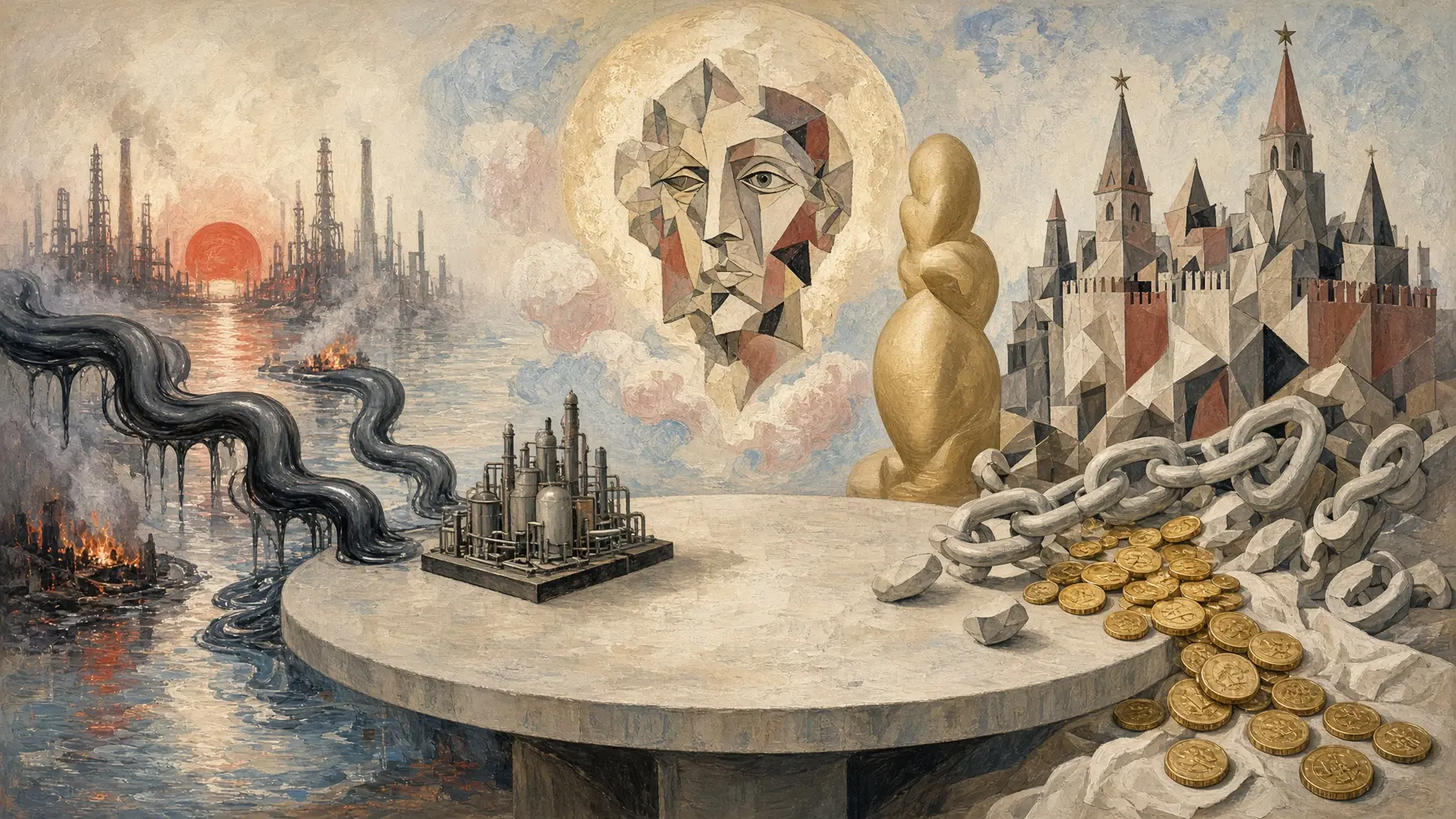
Russia would tie an energy ceasefire with Ukraine to the easing of American sanctions, and would also link the agreement to a deal on Black Sea shipping, the Kyiv Independent reported on October 9, citing American and Ukrainian officials. According to a report by Tim Zadorozhnyi and Jimmy Rushton, Russian presidential envoy Kirill Dmitriev discussed halting attacks on energy infrastructure with…
Ukraine's energy grid, damaged in Russian attacks, is being repaired around the clock
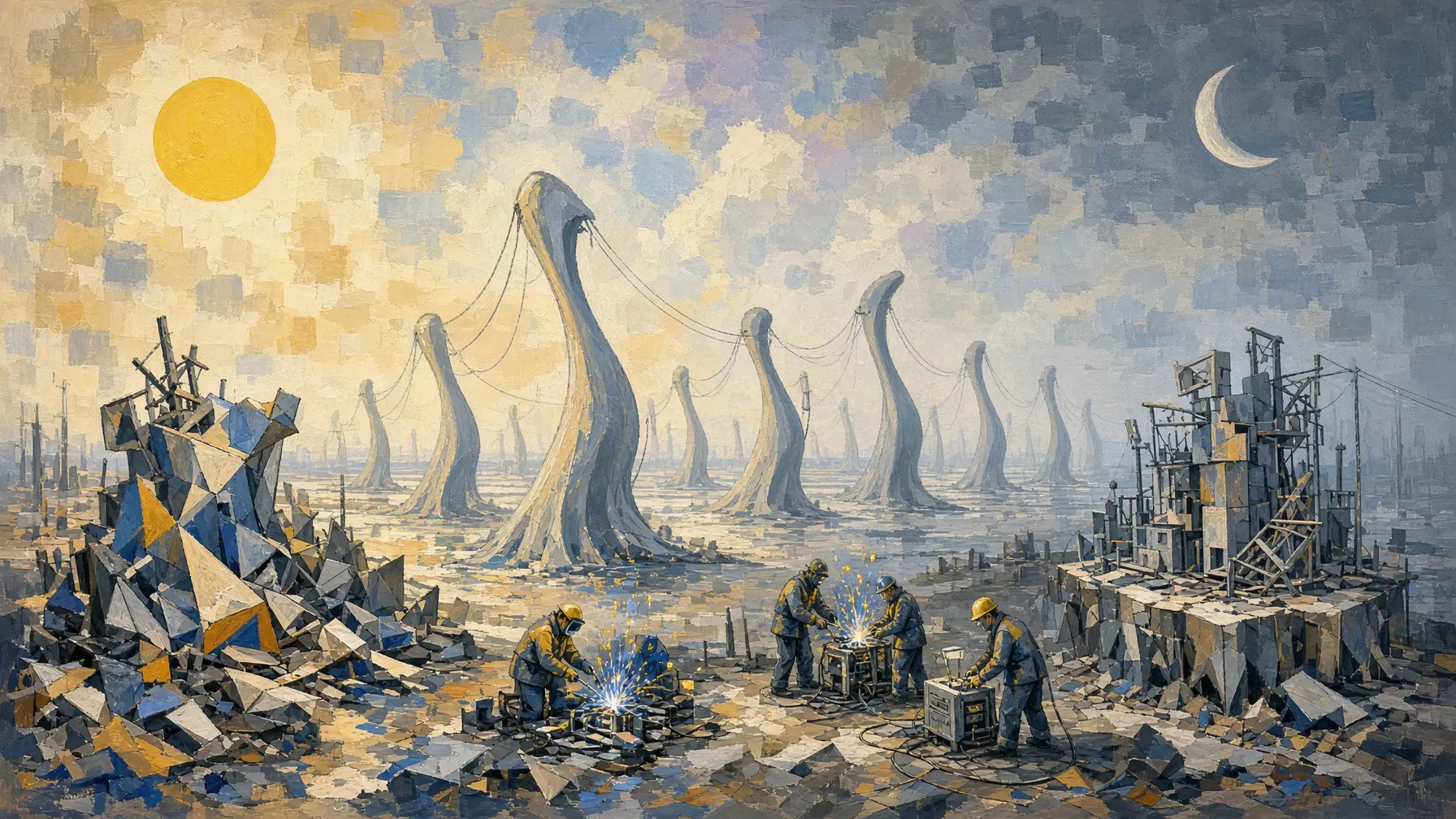
Russian attacks have caused significant damage to Ukraine's electricity grid and power transmission facilities, and restoration work is underway around the clock, Volodymyr Zelensky said on October 9, following talks with military and government officials. The president thanked the repair crews, energy companies and regional authorities for quickly organizing the work, while noting that the…
Russians are putting barbed wire on the roofs of the Zaporizhzhia nuclear plant
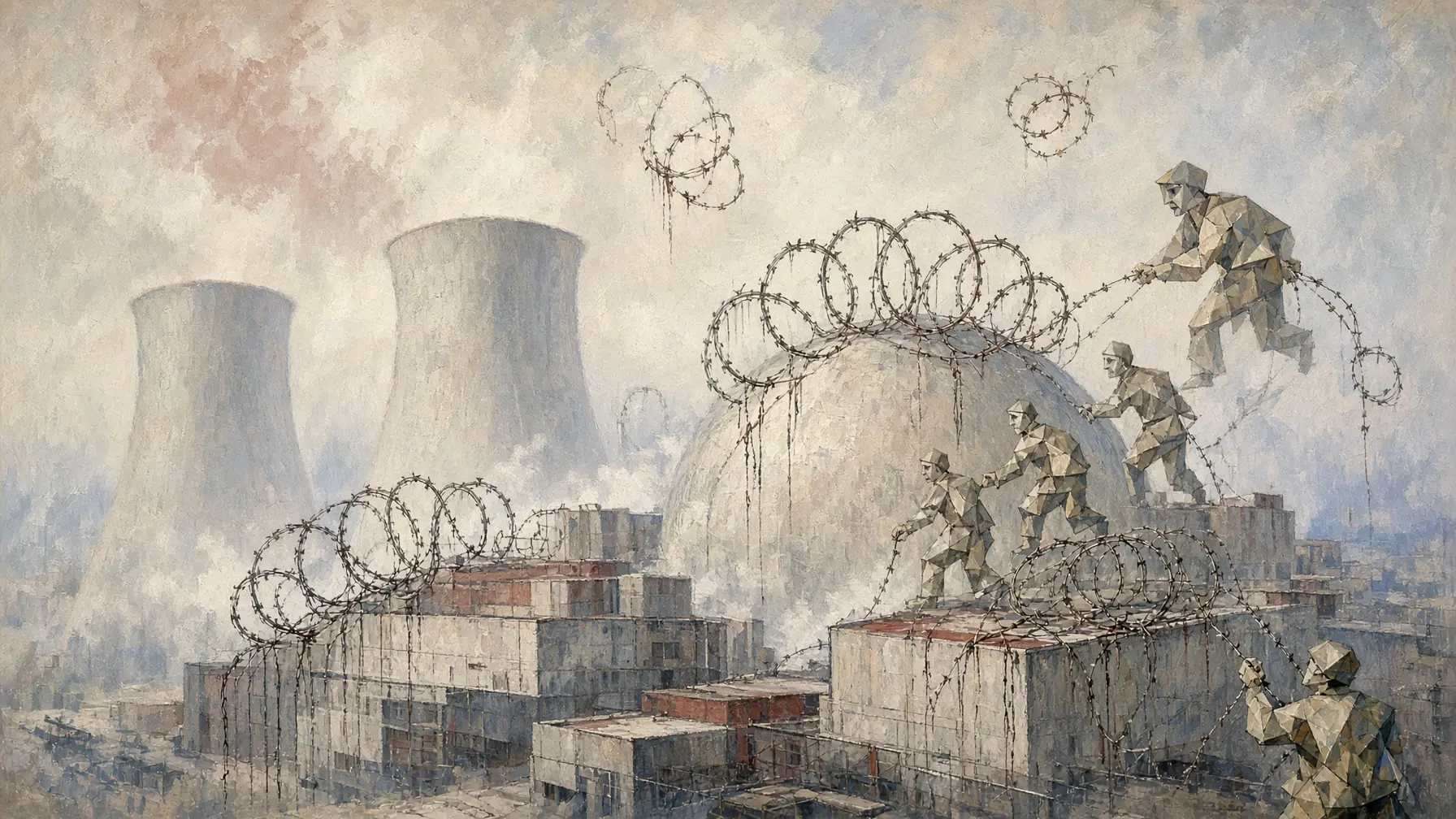
Russian military positions, electronic warfare and reconnaissance antennas, as well as several hundred meters of barbed wire are shown in footage published by the local Telegram channel actual_energodar about the occupied Zaporizhzhia nuclear power plant. According to the report, published on October 9, the military equipment and positions were placed on the roofs of the reactor and turbine…
OSINT: four large oil tanks burned out at the Samara pumping station
Four oil tanks, each with a nominal capacity of fifty thousand cubic meters, were affected by the fire that broke out after the October 8 attack on the Samara-2 pumping station, according to an assessment based on satellite imagery published by an analyst using the handle absreliable. The images released on October 9 show heat anomalies and smoke over the tank farm, and the report states that…