
We are living through complicated times, and RMDSZ has abandoned us
We, the part of the Hungarian community that fate and the judgment of history have confined within Romania's borders, are living through a complicated and difficult period. The country is changing, and it increasingly seems that our sole representation is unable to keep up with these changes — and that's without even mentioning its capacity to respond. In the past few months, however, RMDSZ has put on such a nosedive that I never thought I would live to see it, let alone experience it.
I felt the way most Transylvanian Hungarians do: even if the tulip party is a bunch of traitors, a filthy, corrupt lot, at least they're smart, they understand the ins and outs of the games of power. Then it turned out that isn't even true — it practically looks as if RMDSZ is living out its final years and no longer wants anything except to fly off peacefully to Mykonos, tuck away a few more million (in euros), and guard, watch over and multiply the loot.
But the signs were already there earlier: in the final stretch of the 2025 government formation, Hunor openly championed raising VAT, while today he's trying to lure the electorate with tax cuts, mentioning the indexation of pensions almost daily, because the Transylvanian Hungarian electorate is elderly — quite apart from the fact that even Viktor Orbán's 14th-month pension trick didn't pan out, and a responsible force in Romania cannot raise pensions. Nor the minimum wage, for that matter. But that's nothing — what came after really shows that UDMR has become a genuinely Romanian party, and the worst kind at that, openly taking part in building an illiberal Romanian autocracy. As if RMDSZ were now helping the PSD and AUR finish in Romania what Viktor Orbán couldn't finish in Hungary. Here are a few examples:
In the relevant parliamentary committee, RMDSZ openly blackmailed the representatives of the other parties: if the integrity law included an obligation to disclose financial interests, RMDSZ would not vote for the law. This was the integrity law whose adoption was a PNRR milestone, worth many millions of euros. In the end we got an integrity law exactly the way RMDSZ wanted it — without the disclosure of financial interests, so we still don't know where our representatives keep their bank accounts, which companies they have stakes in, or where they get their commissions, dividends and so on. This same integrity law later contained a retroactive provision when it came before parliament — after a joint PSD–AUR romp and laughing fit, Dominic Fritz was knocked out. The matter went before the Constitutional Court, where the vote of RMDSZ delegate Csaba Asztalos proved decisive, so the law entered into force, Fritz lost his mandate as mayor of Timișoara, and the representatives' secrecy became permanent. Asztalos later explained that if he had voted no, there would have been a tie — yes, a fine argument in a legal dispute that the European Commission and the Venice Commission are now looking into with interest.
Then in September, in exchange for keeping the position of quaestor, RMDSZ voted an AUR member and an SOS member into the leadership of the Chamber of Deputies. This also meant that PNL and USR representatives were pushed out of it.
The new leadership of the Chamber of Deputies then appointed, at lightning speed, to the head of the public broadcaster Sorina Matei, who had dutifully spread pro-Russian fake news, and after the interim period, which expired yesterday, her position as director has now become permanent. None of this could have happened if AUR's and SOS's people hadn't made it into the Chamber's leadership, thanks to RMDSZ. (Today came the news that the president of the Court of Accounts was likewise voted in, a PSD figure — something we flagged months ago!)
This same leadership of the Chamber of Deputies decides on the agenda, so one after another issues kept coming up in parliament that serve no purpose other than to rattle the nerves of Transylvanian Hungarians: remember the flag-kissing law? That a Romanian flag has to be displayed in every square, everywhere — an AUR bill, good for stirring people up, Hungarians and Romanians alike, but it could only reach parliament because RMDSZ helped put such figures into its leadership. Following this pattern, as a kind of sequel, came Dan Tănasă, who wanted to turn the locality name Bálványos into Bălvăniș, officially, administratively, legally, backed by an opinion from the Romanian Academy, whose president, Ioan Aurel Pop — who once informed on the Romanian emigration in the West for the Securitate — is happy to issue any kind of certificate as long as it suits Greater Romanian and expansionist Russian imperial views. Bălvăniș could reach parliament because RMDSZ, in exchange for the quaestor position, voted AUR and SOS representatives into place — was it worth it?
For them, yes, because AUR's anti-Hungarian outbursts are as necessary to RMDSZ as a crust of bread to the starving, as water to the desert, and so on. Because beyond that there's no other answer, no vision, no explanation — Majális Street has turned into a grey November, rainy, muddy, freezing, cold and bleak, and Hunor and his circle can't find an answer to what happened in Budapest on April 12 — true, its blows haven't yet reached RMDSZ, but Serbia's elections are already sending them a warning sign. The Alliance of Vojvodina Hungarians (VMSZ) managed to get only two representatives into the Serbian legislature, instead of the previous six; according to authoritative estimates, the Hungarians of Délvidék, the Southern Region, (because that is their correct designation, not "Vojvodina Hungarians," since today's region took its name from the Serbian Vojvodina proclaimed by the Serbs in 1848, after they surrounded the Holy Trinity statue in Zenta with severed Hungarian heads — but if thirty-odd years of democracy couldn't bring about this semantic revolution, I'm not the one who's going to start it now) — while the Students' List also got two Hungarians elected, and the geographic distribution of the votes also shows that Hungarian-populated regions voted in significant numbers for change in Serbia; of course, VMSZ cast its lot with continuity alongside Vučić, and of course it fear-mongered.
One would think Hunor and his people could learn from others' mistakes and recognize that Romania is changing, that things can't go on the way they have — the latter is something they themselves promised after the 2024 presidential election. It's worth pausing here too — this Georgescu, dispatched from Moscow, is popular among a considerable part of Transylvanian Hungarians, and RMDSZ has no answer to this pro-Russian sympathy, doesn't push for the release of the reports on the basis of which the first round of the 2024 election was annulled — though admittedly that would only interest those with a keen ear for such things. But the point, the real point, is this: after November 2024, Hunor and his people made one promise after another that they had understood society's message and knew they had to change — and then they carried on exactly where they'd left off, so they dumped on us, as their presidential candidate, Crin Antonescu, a man who earned himself a dubious reputation as the saboteur of the Hungarian-language medical faculty in Târgu Mureș, yet Hunor and company weren't even ashamed to take this rabid chauvinist down to Sfântu Gheorghe, to have him ask for bread in Romanian.
And it's still not over: Ugar wrote back in August that rabies was spreading among livestock and pets because of missed vaccinations, then we reported in September that the epidemic had reached Harghita County as well — and today we brought the news that Harghita County now has almost as many outbreak hotspots as euros in Lóci Antal's pocket, and the officials parachuted by RMDSZ into local seats of power can offer nothing but advice — and at that, they're worse than if a farmer from Gheorgheni asked an AI instead. They couldn't stop the decline of Praid; some of the miners were recently laid off from the salt mine, and the rest are bracing themselves, knowing their turn will come too.
And on top of all this comes the administrative reform, like a decorative napkin on a cake of shit. Not long ago, Hunor and company signed a support agreement with Niculescu, backing his government, abstaining from no-confidence motions and not voting for them — but there's no mention of what particular Hungarian interest drove them to do so; even after our countless articles on the subject, RMDSZ still hasn't disclosed what it's getting in exchange for supporting the government.
We've written a lot about the administrative reform in recent days, and we'll keep writing, because for now things could still turn out well — I mean, if we played our cards right, it could even lead to autonomy, de facto if not de jure — and several standalone Hungarian administrative units could still be saved, but let's be clear: it won't happen with this RMDSZ. It's not going to work this way, because it can't! Our one-party outfit has so far only managed to produce the Torockó Declaration, in which they promised things that are already included in the government program whose support they signed a contract with Niculescu for — except that back then there was no talk yet of a 3,000-resident population threshold, nor perhaps of merging counties, and since Benea's latest interview we know there won't be a referendum, none at all.
History usually punishes bad decisions, but bad decisions can still lead to good outcomes later on, through subsequent adaptation. History, however, punishes the failure to decide far more cruelly — procrastination, of which Pató Pál is merely the Olympic champion, but among Hungarians it's practically a national sport — is something that has to be paid for where history is concerned, and the bill history presents is always cruel, never fair, but it always arrives right on time.
We have no time left — this is something as many of us as possible need to understand, because RMDSZ no longer will.
Anna Karczag
Did you like this article?
Support our work with a small donation
Secure payment via Stripe • Min. 2 EUR
Gesta recommendations:

Now the Chamber of Deputies Should Summon Lóci Antal Over Mykonos
The Chamber of Deputies voted on Wednesday to set up an investigative committee to find out who flew by private jet to Mykonos and Nice, and who paid for their trip. The committee's establishment was initiated by the PNL and the USR, and it will consist of twenty-five MPs in proportion to the parliamentary groups' seats, with public sessions and a public final report. According to Diana Stoica,…

You can never have too much good news: Putin's ambassador to Washington has died
The Russian foreign ministry announced on Wednesday that Alexander Darchiev, Russia's ambassador to Washington, had died unexpectedly at the age of 66. The ministry called him an outstanding diplomat, an experienced leader, a good friend and a mentor — four epithets for the tribute, and just one for the news of his death: sudden. Where and when he died, and what caused his death, the statement…
The PSD–AUR–UDMR ‘coalition’ divided up four key positions in two days
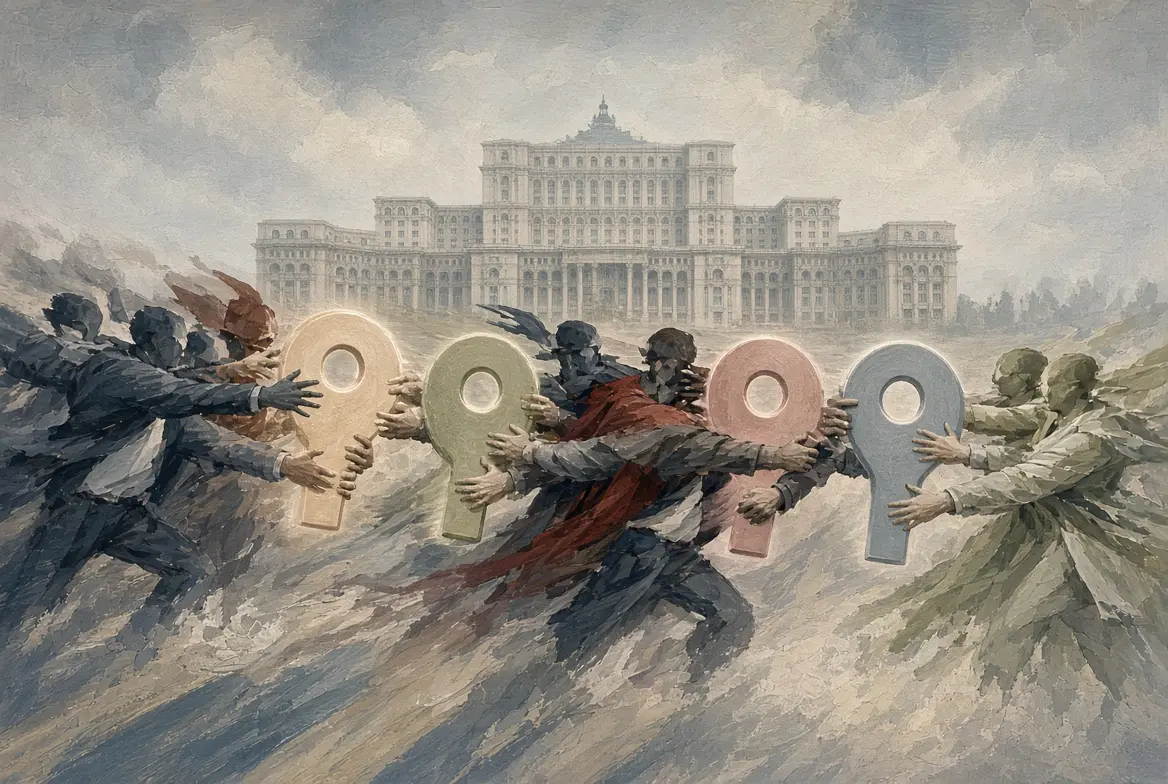
The PSD and the AUR do not officially form a coalition, and naturally neither does the UDMR, yet in practice they divided up four key positions between them in just two days: the two parties had already jointly elected the heads of the public television and radio broadcasters before, and now they have named the interim president of the Court of Accounts, while on Monday they split the…
The French far right and far left are cozying up to each other over Ukraine
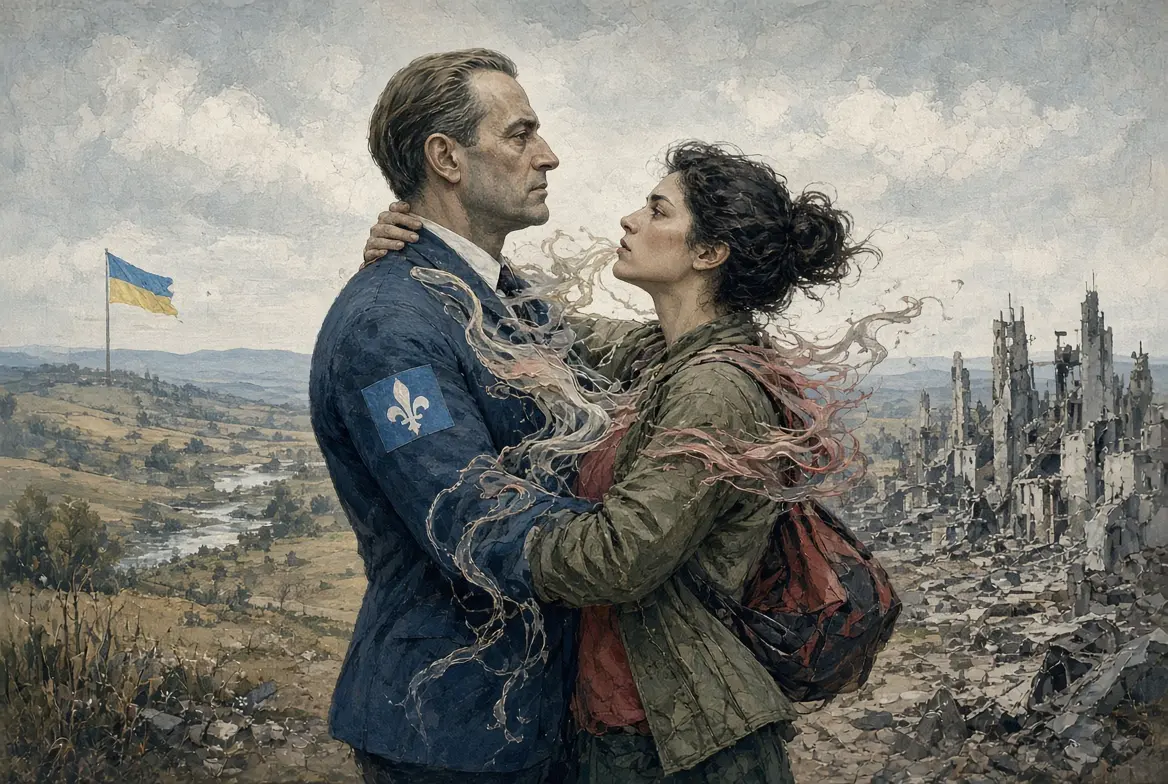
Marine Le Pen would give Ukraine's financial support no more than another six months, while Jean-Luc Mélenchon would pull France out of NATO and reopen the question of who the Russian-occupied Ukrainian territories belong to. According to a November poll, the two of them would make it into the second round of the French presidential election. During the campaign, they will no doubt have plenty to…
The Cattle Have Gone Mad in Harghita County! And We Don't (Just) Mean the Politicians
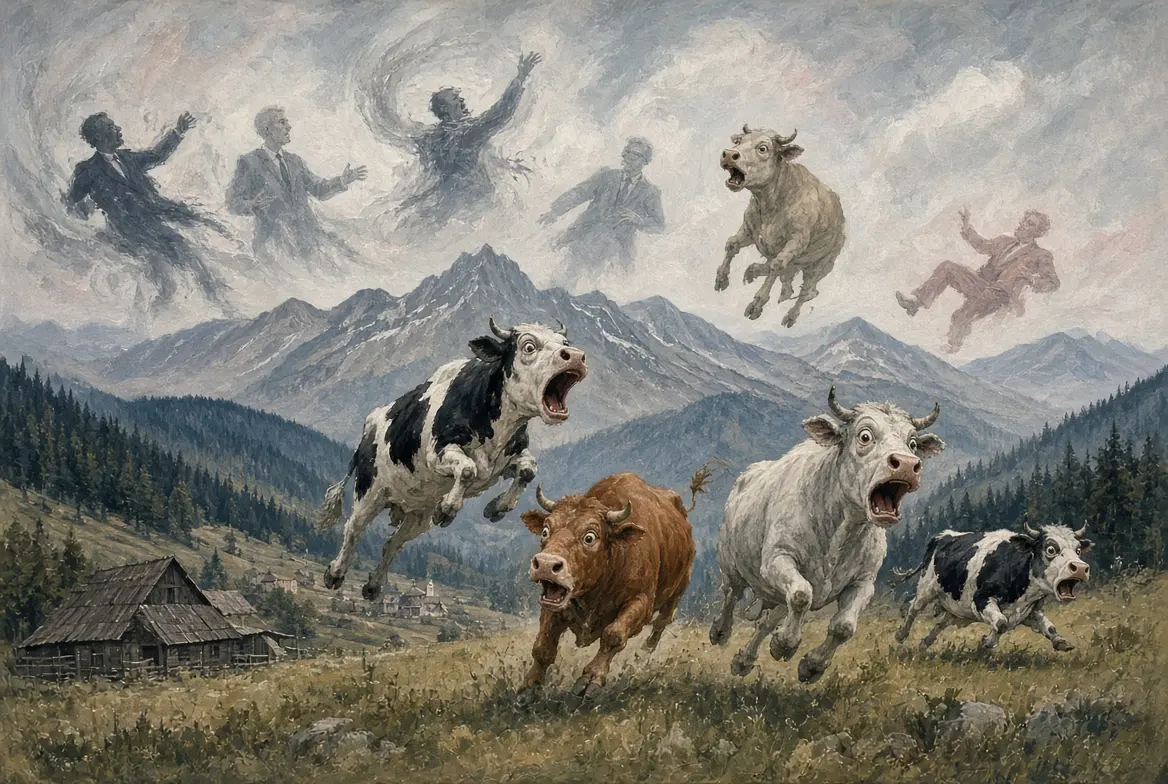
The rabies outbreak continues to spread in Harghita County. The county's Sanitary Veterinary and Food Safety Directorate (DSVSA) has so far confirmed 32 foci in nearly every commune of Upper Ciuc (Felcsík) and in Miercurea Ciuc (Csíkszereda). Eighteen cattle, eight foxes, four sheep, one dog and one cat have fallen ill; according to Radio Târgu Mureș, two more samples were sent to the lab on…